SA Rail Opens to Private Operators as Cape Ships Surge
South Africa signed rail access agreements with 11 private freight operators on the day Cape…
Washington's proposed 12.5% forced-labour tariff is in its comment window and the call has shifted to Pretoria: retaliate or hold for a reset. 22 June is the deadline.
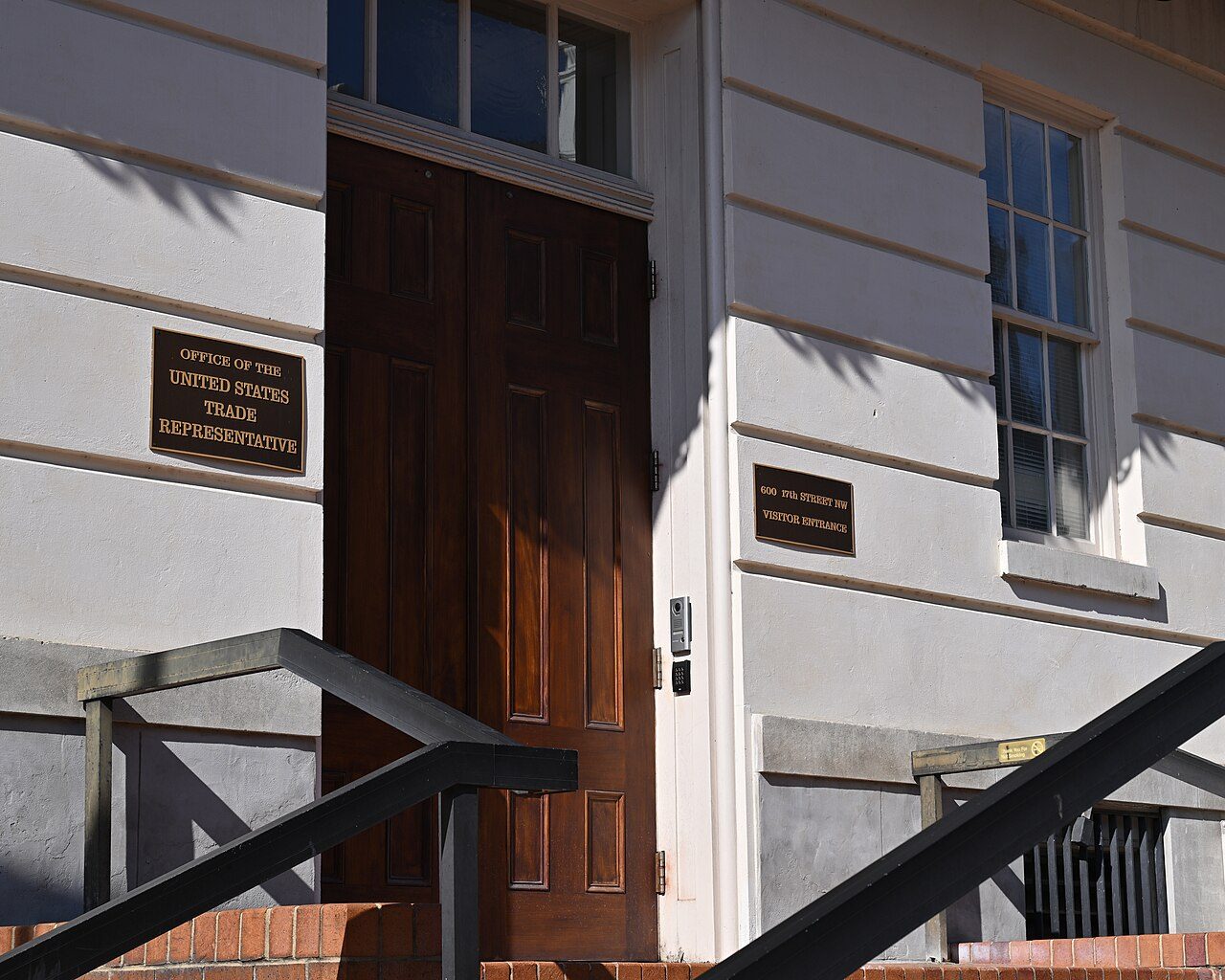
The Office of the United States Trade Representative has put its proposed 12.5% Section 301 tariff on South African goods out for public comment, and in doing so has quietly handed the next decision to Pretoria. The substantive question is no longer what Washington intends — that much is on the record — but how South Africa answers it: by hitting back at American imports, or by holding its fire for a negotiated reset. The first hard deadline lands on 22 June, and the choice will shape not only what exporters pay at US ports but what importers pay for American machinery, grain and technology at home.
On 2 June USTR published findings across 60 economies under Section 301 of the Trade Act of 1974, concluding that those countries had failed to enforce a prohibition on goods made with forced labour. South Africa sits in the harsher of the two proposed bands — an additional 12.5% ad valorem duty rather than the 10% applied to the rest. The mechanics are tight: any party that wants to be heard must lodge a request to appear by 22 June, written comments close on 6 July, and the public hearings begin on 7 July. Washington has signalled it wants the measure ready to take effect as the temporary 10% universal Section 122 rate expires on 24 July — which means this is not a replacement duty but a fresh layer stacked on top.
That stacking is the part South African boardrooms keep underestimating. The proposed 12.5% would sit above the 10% universal tariff that has applied since the original 30% "reciprocal" rate was struck down as unlawful earlier this year, and above the 25% Section 232 duty already biting on vehicles and parts. It arrives while the African Growth and Opportunity Act limps through a one-year extension that expires on 31 December 2026. Four tariff fronts, one of them closing, and the runway to influence the newest of them is now measured in days.
The exposure is real but concentrated. South Africa exported roughly US$8.75 billion to the United States in 2025, about 8% of its total goods exports. Vehicles accounted for some $1.07 billion of that — a figure already gutted by an 82.2% year-on-year collapse in unit terms over the first half of 2025. Citrus is the other pressure point: the US takes close to R1.8 billion of South African fruit each year, underpinning an estimated 140,000 jobs across the value chain, and the affected orchards in the Northern and Western Cape have the fewest alternative markets within reach of a 35-day shipping season.
Retaliation would move the pain onshore. A source in the National Treasury has confirmed that retaliatory duties on US goods are under discussion, and here the calculus inverts: South Africa imports capital goods, aircraft components, wheat and high-end technology from the United States, and a counter-tariff would land as a higher customs value on exactly the inputs local manufacturers and farmers depend on. Any such duties would be levied by tariff line — meaning importers would need to re-check the affected tariff headings against their HS codes the moment a list is gazetted, because a retaliatory schedule rarely tracks neatly to a sector and the burden falls wherever the classification falls.
Trade Minister Parks Tau has been pointedly cautious, restating South Africa's commitment to a negotiated reset and formally requesting that Washington produce the evidence behind its forced-labour allegation. He is right to hesitate, and the reason is leverage. The trade relationship is profoundly asymmetric: the United States absorbs roughly 8% of South Africa's exports, but South Africa is a rounding error in America's import basket. A retaliatory tariff that an exporting superpower can shrug off is one that a mid-sized open economy pays for twice — once in dearer imports, and again in the escalation it invites. There is also a framing trap. Because the duty is dressed as a labour-standards measure rather than a commercial grievance, there is little substantive deal to strike: Pretoria can document its anti-forced-labour statutes, but it cannot negotiate away a pretext. The optimists betting on a clean diplomatic reset are missing that even a best-case outcome leaves the underlying 10% universal tariff and the 25% auto duty fully intact. Winning the Section 301 round changes the worst number, not the baseline.
South Africa should not retaliate, and it should say so plainly rather than letting the option dangle. The smarter play is procedural and aggressive: flood the 7 July hearing with documented evidence, press hard for product carve-outs on citrus and components, and treat the 22 June request-to-appear deadline as mandatory rather than optional for any exporter with meaningful US volume. A retaliatory duty on American capital goods would be a tax on South Africa's own reindustrialisation — the precise opposite of what an economy trying to rebuild manufacturing capacity can afford. Where the energy belongs is in diversification that is already viable: the zero-tariff door China opened on 1 June, the deepening intra-African corridors, and the EU market that no Section 301 finding can touch. Exporters waiting for clarity are misreading the timeline. The clarity is the timeline — 22 June, 7 July, 24 July — and the only rational response is to model landed costs at a stacked 12.5% today and lodge to be heard before the window shuts. Pretoria's restraint is the correct posture; passivity from the firms it represents would not be.