The 30 June Shutdown and the One Road SA's Imports Can't Lose
A truck-driver shutdown set for 30 June targets the N3, N2 and Durban harbour routes…
AI is sold as the fix for broken supply chains — but the buildout strains the copper, transformers and grids those chains run on. South Africa is caught in both.
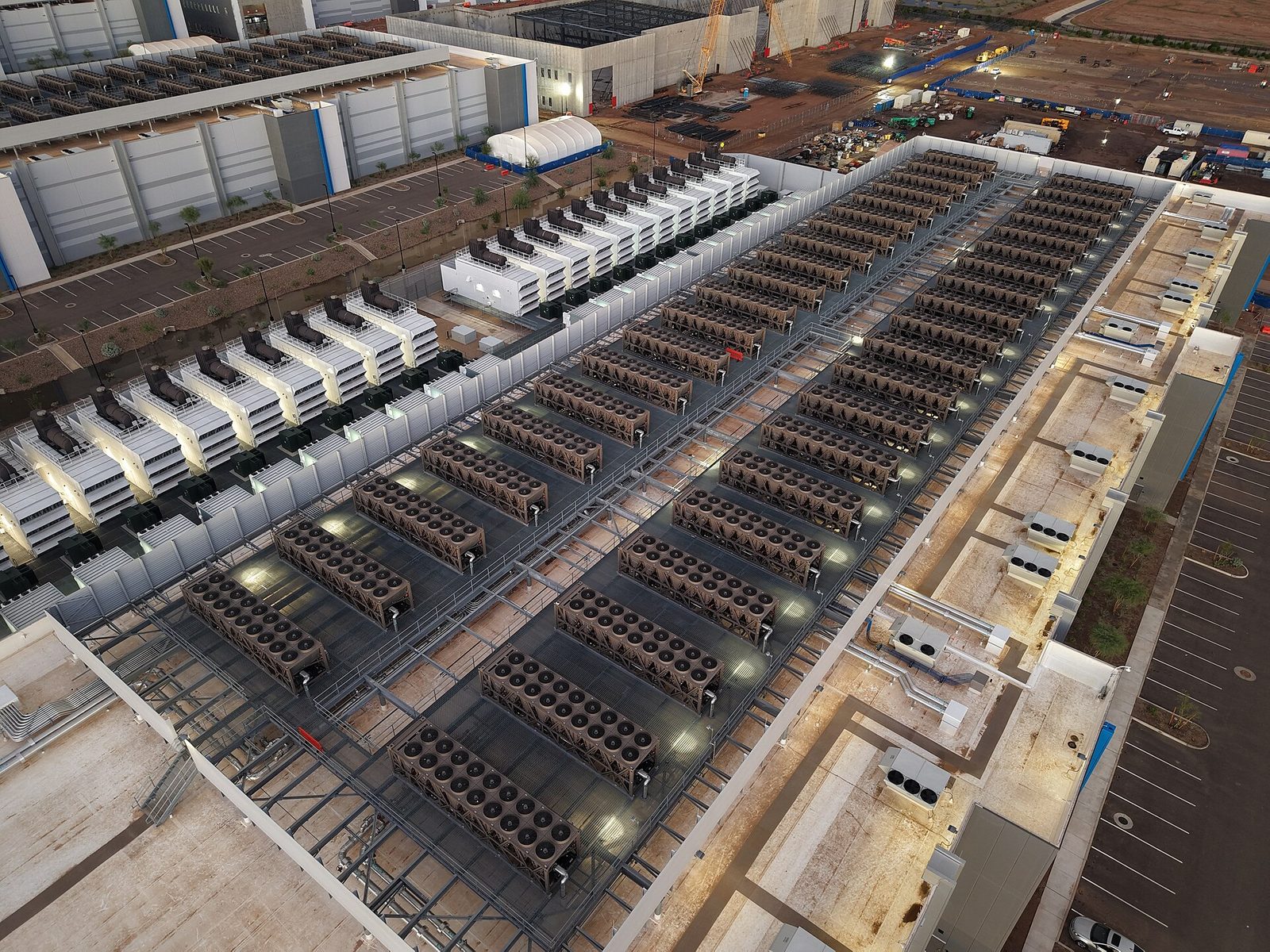
For years, the story of artificial intelligence has been told as a virtual one — a tale of language models, autonomous agents, and ever-larger clouds. In 2026, that story has collided with a physical reality the industry can no longer abstract away, and with a regulatory vacuum that has, until recently, suited it to ignore.
The paradox is circular. Global enterprises are deploying AI to repair fractured, volatile supply chains. At the same time, the unprecedented capital pouring into AI infrastructure is itself stressing the supply chains for copper, transformers, advanced packaging, and the electrical grid. And while the industries AI now touches — finance, aviation, pharmaceuticals, nuclear energy — operate under elaborate international rulebooks built over decades, AI itself operates under almost none.
South Africa sits inside this paradox in three distinct ways at once. The country is a major supplier of the critical minerals the global AI buildout depends on. It hosts sub-Saharan Africa's largest data-centre cluster, now scaling rapidly to serve hyperscalers. And it has just emerged from one of the most disruptive grid crises any middle-income economy has experienced this century — a crisis the rest of the world is now flirting with, in slow motion, as AI demand strains national grids. Each of these positions carries opportunity. Each carries risk. None of them, at present, is being navigated under a coherent national or international framework.
Supply chain management was, for decades, a reactive discipline. Just-in-time inventory squeezed cost out of the system but left companies exposed to every blackout, blockage, and border closure — a lesson South African manufacturers learned harder than most through the load-shedding years.
Enterprise software giants — Oracle, SAP, Microsoft, and a cohort of specialised startups — have spent the past three years embedding generative AI and predictive analytics into supply chain management platforms. The shift is from reactive firefighting toward predictive orchestration, and it operates on three levers.
Dynamic demand forecasting. Conventional forecasting leaned on historical sales. Modern systems ingest thousands of external variables — weather patterns, port congestion indices, social sentiment, geopolitical risk scores — and update forecasts continuously. McKinsey research has found that companies using AI-driven forecasting can reduce forecast error by 20 to 50 percent over traditional methods. For South African exporters, that capability is most acute at the ports: Durban and Cape Town's congestion has been a persistent drag on competitiveness, and AI-driven scheduling is one of the few tools that can be deployed faster than physical port upgrades.
Logistics and route optimisation. Carriers such as Maersk and DHL now route fleets in real time against weather, fuel cost, and disruption data. Inside warehouses, AI-driven robotics from companies like Symbotic and Locus have moved from pilot to production at scale. Local adoption is uneven — Imperial Logistics and Bidvest have invested seriously, but a long tail of mid-sized operators has not — and the gap will widen as the technology compounds.
Supplier risk mapping. AI systems crawl multi-tier supplier networks, parsing financial filings, regulatory notices, and news feeds to flag distress at a tertiary supplier before a procurement officer would otherwise hear about it. After the 2021 chip shortage exposed how blind most large manufacturers were beyond their first tier of suppliers, this capability moved from novelty to procurement standard. For South African firms reliant on imports through politically volatile corridors — the Red Sea route in particular — early warning is not a luxury.
The collective effect is what consultants call a "digital twin" of the global supply chain — a simulation against which disruptions can be modelled before they manifest physically. The promise is real. But the digital twin still depends on a physical original, and on the assumption that the AI doing the optimising will behave predictably. Neither assumption is yet backed by enforceable rules.
While AI software heals logistics, AI hardware is reshaping commodity markets. The next generation of compute requires physical infrastructure on a scale the industry has not previously contemplated: hyperscale data centres, high-performance chips, liquid cooling loops, and the electrical grid capacity to feed all of it.
That infrastructure runs on critical minerals — and a striking share of those minerals sit beneath South African soil.
The country holds roughly 70 percent of the world's platinum and dominant shares of palladium, manganese, and chrome. The Department of Mineral and Petroleum Resources' Critical Minerals and Metals Strategy, finalised in 2025, lists platinum, manganese, iron ore, coal, and chrome as the five "highly critical" minerals, with palladium, rhodium, and rare earth elements close behind. Each of these has a direct or indirect role in the AI hardware stack. Platinum group metals are essential to high-performance electronics. Manganese is moving into next-generation memory technologies including resistive RAM, alongside its established role in battery chemistries. Rare earths sit in the magnets and high-performance components woven through every data centre.
The aggregate demand picture is striking. S&P Global projects global copper demand rising from roughly 28 million tonnes in 2025 to more than 42 million tonnes by 2040, with AI infrastructure, electric-vehicle adoption, and grid expansion driving the curve simultaneously. A hyperscale AI data centre consumes roughly 27 tonnes of copper per megawatt of installed capacity, according to BloombergNEF figures cited by Fastmarkets. J.P. Morgan estimates that a single large AI campus can require up to 50,000 tonnes of copper. Wood Mackenzie forecast a 304,000-tonne refined copper deficit for 2025 and a wider gap this year.
For South Africa, this should be the strategic windfall of a generation. It largely is not. The Minerals Council South Africa estimates that only 3 percent of locally mined platinum and 14 percent of manganese is beneficiated domestically; roughly half the country's 59 chrome furnaces have closed in recent years, choked by energy costs and the absence of a coherent industrial strategy. The country exports the raw inputs and imports the finished technology. The Critical Minerals Strategy attempts to address this, but its beneficiation ambitions sit in tension with Eskom's tariff trajectory and the long lead times required to build processing capacity.
The geopolitical layer is sharper still. In December 2025, the United States formed Pax Silica, a nine-member coalition with Japan, South Korea, Singapore, the Netherlands, the United Kingdom, Israel, the UAE, and Australia, to secure AI, semiconductor, and critical mineral supply chains and reduce dependency on China. No African country was a founding member. India has since joined. The signal to mineral-rich nations of the Global Majority was unmistakable: be supplier, not partner. South Africa's response — whether to align with Western traceability standards, deepen ties with China's processing ecosystem, or pursue a multi-vector strategy — will shape the next two decades of the country's industrial position.
The central tension of 2026 is whether the physical buildout can keep pace with exponential digital compounding.
The most acute illustration came when the Strait of Hormuz was effectively closed in the spring during the Iran–Israel conflict, choking off roughly a quarter of the world's seaborne crude and a fifth of its LNG shipments. Helium supplies — about a third of which passed through the strait — tightened immediately. Petrochemical feedstocks used in everything from plastics to advanced packaging spiked. Hyperscalers running the world's largest AI buildouts found themselves exposed to a 21-mile waterway none of them had previously treated as a strategic risk. The strait reopened, but the lesson stuck: the AI economy runs on tokens, tokens run on GPUs, and GPUs depend on a remarkably narrow set of physical inputs.
The structural constraints are the larger story, and they will not resolve when the next geopolitical crisis does.
High-voltage transformers. Lead times for industrial transformers have stretched from roughly two years before 2020 to as long as five years today, according to Wood Mackenzie. This is not a uniquely South African problem — Crusoe Energy, building OpenAI's 1.2-gigawatt Abilene campus in Texas, has resorted to refurbishing transformers from shuttered power plants — but it lands hard on local hyperscale developers and on Eskom's own expansion plans.
Grid capacity. China has built the equivalent of the entire United States power grid over the past four years. The US has not. Neither has South Africa, although Eskom's recovery from the load-shedding years is the most consequential development in our story. As of mid-May 2026, the country had passed 365 consecutive days without scheduled load-shedding, the Energy Availability Factor was running above 65 percent for the financial year, and the utility was projecting a load-shedding-free winter with roughly 6 GW of surplus capacity. Diesel spend was down by R26.9 billion compared with FY2023. This is real progress, and it has changed the conversation.
But Eskom and the independent analysts watching the system are open about the risk. Coal stations are scheduled to retire between 2026 and 2030; new generation must come online to replace them; only about half of awarded renewable energy projects since 2019 have actually been built. Layered on top of this is a hyperscale data centre boom. Plans from Teraco, Cavaleros, and Microsoft alone could add roughly 1 000 MW to national IT power load — the equivalent of one stage of load-shedding worth of new demand, dropped onto a grid still rebuilding its margin. Eskom's own risk analysis has flagged that the combination of new data centres, an electric-vehicle charging rollout, and the potential reopening of mothballed metal smelters could constrain supply by 2029 unless substantial new generation is added rapidly.
In other words: South Africa fixed load-shedding just in time to face a new demand wave that, if mismanaged, could bring it back.
Mine development. The timeline to open a new copper, platinum, or lithium mine is measured in 10 to 20 years. AI compute demand is doubling on a timescale of months. There is no plausible path on which the supply curve catches the demand curve through new primary supply alone — globally or locally.
Cooling and water. Liquid cooling has moved from optional to mandatory for dense AI server racks. Local operators have responded with engineering ingenuity: Teraco's newest facilities, including JB4, JB5, JB7 and the recently expanded Cape Town CT2 campus, use closed-loop chilled water systems with zero ongoing water consumption — an essential design choice in a water-stressed country. The trade-off is energy intensity, which lands back at Eskom's door.
If these constraints intensify, the macroeconomic consequences are non-trivial. Moody's estimates that hyperscalers are committing roughly $650 billion to US AI infrastructure this year alone. Morgan Stanley Research projects nearly $3 trillion of global AI-related infrastructure investment by 2028. Finance Minister Enoch Godongwana, in his 2026 Budget Speech, described data infrastructure as "as critical as electricity, ports and transport networks" and signalled Treasury would explore incentives for the sector. South Africa already hosts more than 50 data centres and an investment pipeline worth roughly R50 billion over the next three years. The opportunity is genuine. So is the exposure.
Even as enterprises deploy AI to fix supply chains, they are creating a new class of operational risk. And unlike the comparable risks in finance, aviation, or pharmaceuticals — each bounded by decades of accumulated regulation, mandatory reporting, and international coordination — AI risks remain almost entirely self-policed.
The black box problem. When an AI system drops a long-standing supplier or reroutes procurement based on an opaque calculation, human operators need to be able to audit the decision. In finance, model auditability is a regulatory requirement under SR 11-7 in the United States and equivalent regimes elsewhere; in aviation, certification authorities require explainability for safety-critical systems. The Prudential Authority and SARB have moved on model governance for banks, but in the broader South African economy — including the AI systems now making consequential procurement, hiring, and credit decisions — no equivalent universal standard exists. The Protection of Personal Information Act (POPIA) gives the Information Regulator some leverage on automated decision-making, but it was not written with foundation models in mind.
Data poisoning and silos. An AI is only as good as the data it ingests. If internal data is siloed or external data is manipulated by bad actors — a documented concern in shipping manifests, where small data injections can mislead routing models — the system will optimise confidently against a reality that does not exist. Pharmaceutical companies operate under FDA, EMA, and SAHPRA data integrity rules with serious penalties for falsification. AI training pipelines operate, in most jurisdictions including South Africa, under nothing comparable.
Algorithmic monoculture. If most global logistics, credit, and inventory systems run on a small number of underlying foundation models, a single systemic glitch, model regression, or cyberattack could trigger synchronised failures across firms that believed themselves to be independent. The financial sector learned this lesson with quantitative trading models in 2007, and Basel III now requires stress testing against correlated failures. The supply chain industry has not yet had its analogous moment, and no analogous framework is in place.
These are the operational risks. The frontier risks — those attached to the most capable AI systems being trained today — are larger still: misuse by malicious actors, the use of advanced models to design biological or cyber weapons, autonomous systems whose behaviour cannot be reliably constrained, and capabilities concentrating in a handful of firms with limited public accountability. The connection between the two categories is direct: the same foundation models being deployed into procurement, logistics, and credit decisions are downstream of frontier development, and a failure in safety practices at the frontier propagates into every system built on top.
It is worth pausing on how unusual this is.
Civilian nuclear energy is governed by the International Atomic Energy Agency and the Non-Proliferation Treaty, instruments developed within roughly a decade of the technology's emergence. Commercial aviation operates under ICAO with binding safety standards and mandatory incident reporting across 193 contracting states. Global finance lives under Basel III and an apparatus of cross-border supervisory colleges. Pharmaceuticals are bound by ICH guidelines that effectively harmonise drug approval across the major markets. Each of these regimes was built because the technology in question was deemed too consequential to be governed by any single jurisdiction alone.
AI, by contrast, has produced an OECD AI Policy Observatory tracking more than 1 300 national and international initiatives, the vast majority of which are non-binding. The Council of Europe's Framework Convention on Artificial Intelligence, Human Rights, Democracy and the Rule of Law, which opened for signature in September 2024, is the first binding international AI treaty. It is open to non-member states but its enforcement teeth are modest and its coverage is far from universal. The EU's AI Act has been phasing in since 2025 and reaches a major application milestone on 2 August 2026, when most provisions for high-risk systems take effect — but it binds a single market. China regulates AI through algorithmic registration requirements oriented largely toward content control. The United States, as of mid-2026, has no comprehensive federal AI law; firms navigate a state-level patchwork.
South Africa's position is, predictably, in between. The Department of Communications and Digital Technologies released a National AI Policy Framework in 2024 and has been consulting on follow-on regulation; POPIA covers some of the data-protection ground; the Competition Commission has signalled interest in algorithmic competition issues. None of this amounts to a binding domestic AI regime, and South Africa has not yet acceded to the Council of Europe Framework Convention.
The result is a regulatory map in which the most consequential general-purpose technology of the decade is governed less rigorously than, in many jurisdictions, the chemical content of household cleaners. The voluntary commitments that frontier AI labs have made — pre-deployment safety testing, red-teaming, responsible scaling policies — are real and useful. They are also voluntary, and nothing binds a competitor, a new entrant, or a state actor.
The nuclear analogy is imperfect. Nuclear weapons are categorical and the proliferation question is more contained. But the analogy is instructive on one point: the IAEA framework was built because the major powers recognised that the technology's risks were transnational and that uncoordinated national approaches would fail. AI's risks are also transnational. The coordinated approach does not yet exist.
For supply chains specifically, the absence matters in a practical way. If a model regression in one foundation model triggers misrouted shipments across multiple carriers in multiple countries — including ours — who investigates? Who has authority to require disclosure? Who sets the standard for what counts as an acceptable failure rate? Today, the answers are: no one in particular, no one in particular, and no one in particular.
The future of supply chains and AI is bound in a tight, fragile feedback loop, held together by less institutional architecture than any comparable technology in modern history.
| The Optimists' View (Digital) | The Reality (Physical & Institutional) | |
|---|---|---|
| Primary driver | Algorithmic efficiency, predictive logistics, automated warehouses | Mineral scarcity, grid capacity, manufacturing bottlenecks |
| State | Proactive, resilient, adaptive | Constrained by long lead times for infrastructure and mining |
| Governance | Voluntary commitments, industry self-regulation | Fragmented national rules, one regional binding treaty, no global framework |
| End state | A frictionless, self-healing global supply network | A hard ceiling on AI growth — and a governance debt that compounds |
For South Africa, the stakes are unusually concrete. The country owns a meaningful share of the minerals the global AI buildout requires. It hosts the continent's largest digital infrastructure cluster. It has just stabilised the grid that will determine whether that cluster can grow. And it has, so far, treated each of these as separate policy files — minerals strategy in one department, energy planning in another, AI governance in a third, industrial policy somewhere else again.
AI can cure inefficiencies that have plagued global logistics for decades. It cannot, however, code its way out of geology and metallurgy, nor regulate itself into the kind of cross-border trust that took aviation, finance, and nuclear energy decades to build. The mines, the transformers, the grids, and the treaties that will determine whether the AI revolution delivers on its economic promise are governed by physical and political lead times that no algorithm can compress.
The countries that grasp this first — and treat their minerals, their grids, their data centres, and their AI policy as a single integrated portfolio rather than four separate ones — will be the ones still building in 2030. South Africa is unusually well placed to be on that list. It is not yet acting like it.