Durban's Queues Return as the Natal Corridor Goes Dark for Nine Days
Transnet closes the Durban–Gauteng rail line for maintenance from 25 August just as vessel queues…
A truck-driver shutdown set for 30 June targets the N3, N2 and Durban harbour routes — the corridor most of SA's imports depend on. Here is the real exposure.
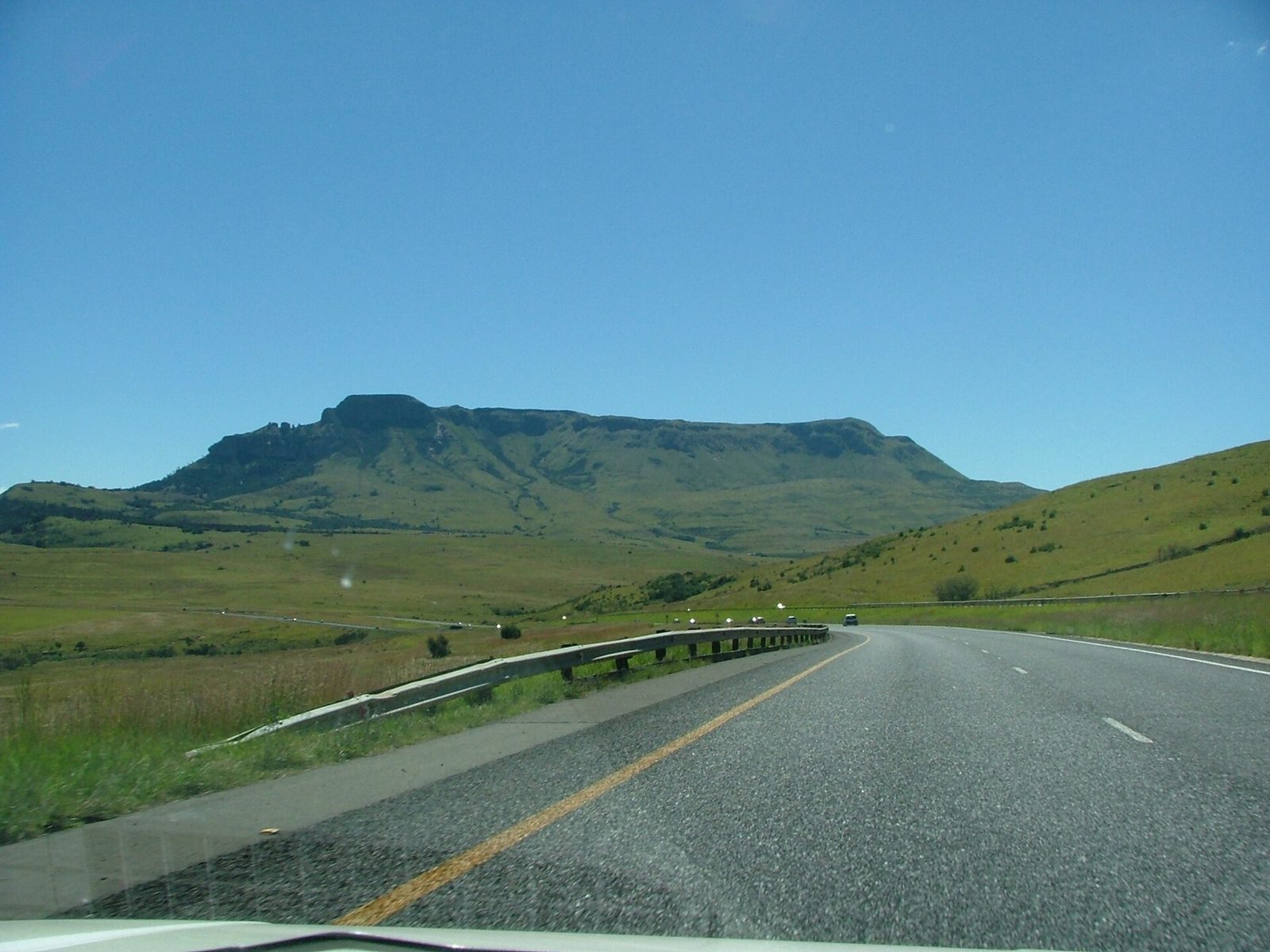
From first light tomorrow, the All Truck Drivers Forum and Allied South Africa (ATDF-ASA) intends to close the N3 Natal Corridor — the single stretch of tar that moves the bulk of the country's containerised imports between the Port of Durban and the Gauteng interior. The 30 June action arrives on an economy that has spent two years clawing back port performance it could ill afford to lose, and on a corridor already bleeding from organised cargo crime. For importers and exporters, this is not a headline to monitor; it is a planned outage to price in.
In a memorandum first issued on 20 May, ATDF-ASA confirmed it would back a nationwide truck-driver shutdown on 30 June, with its secretary-general, Gugu Sokhela, telling members the industry had reached a "breaking point" over the employment of foreign nationals behind the wheel, weak enforcement of labour law, and the broader regulation of the sector. The stated targets are the arteries, not the capillaries: the N3, the N1, the N2 and the routes feeding the Durban harbour network. Sokhela has urged members to remain peaceful and follow lawful instructions, but the intent to obstruct the country's primary freight corridors is explicit.
Government's posture is flat denial of any disruption. Acting Police Minister Firoz Cachalia has said 30 June will be "a normal working day", and that R600 million has been redirected within the South African Police Service to fund the operational response. Acting National Commissioner Puleng Dimpane confirmed on 24 June that planning across national, provincial and local levels was finalised, with metro police and private security folded in. The state's message is unambiguous: peaceful protest will be protected, but road-blocking, intimidation, looting and the torching of vehicles will be met with the full force of the law. An organised sector has named the freight network as its battleground; the state insists the network will keep moving.
The exposure is concentrated because South African import logistics is concentrated. The Port of Durban handles the lion's share of the country's container throughput, and almost all of it leaves the quay on a truck bound up the N3 for the City Deep inland terminal and the Gauteng distribution belt. Transnet has worked hard to rebuild that quay: berth utilisation at Durban rose from roughly 52% in 2024 to around 76% in 2025, and the anchorage queue that once stacked twenty vessels at a time was brought down to zero. None of that recovery survives contact with a corridor that cannot clear cargo inland. A blocked N3 turns a healthy berth into a bottleneck within hours, as boxes pile up landside and ships begin to wait for space again.
For the importer, the costs are mechanical and immediate. Containers that miss their collection window start accruing demurrage at the terminal and detention on the box itself, both billed per day regardless of whose fault the delay is. Just-in-time production lines that hold little safety stock are the first to stall, and every day of closure lifts the landed cost of goods budgeted on the truck simply running. Exporters face the mirror image: citrus and other perishable cargo timed to a vessel's laycan window cannot afford a missed sailing, and a single blank day on the N3 can mean fruit that ripens past its grade before it reaches the cold store.
The comforting read is that this shutdown fizzles. Many threatened national stayaways have collapsed into a quiet day, the affiliated "March and March" movement has itself denied calling a shutdown, and R600 million of police readiness is a serious deterrent. That optimism is not baseless — but it misreads where the fragility actually sits. A nationwide action does not need to succeed to do damage; it only needs to close one carriageway for a few hours. The 30 May preview demonstrated the point precisely, with stretches of the N3 in KwaZulu-Natal blocked and roughly fifty trucks stranded. On a corridor running to the rhythm of on-time-in-full delivery, a local blockade cascades far beyond its footprint.
The deeper problem is that the corridor is already compromised before any protest begins. The Road Freight Association has warned that official figures understate the violence on the network, noting that many operators — particularly the self-insured, who do not need a police case number to make a claim — have simply stopped reporting hijackings. Even on the conservative SAPS count, the Association puts the toll at roughly 30 to 35 truck hijackings every week, with 420 recorded in the second quarter of 2025 alone, and Gauteng absorbing more than 60% of the national total. A TAPA EMEA analysis logged 2 670 cargo-theft incidents over eighteen months for losses near R577 million — and that figure rests on the 3.4% of victims who disclosed a value, meaning the true loss is a multiple of it. A protest that paralyses the N3 does not create this risk; it concentrates a crowd, a grievance and a queue of stationary trucks onto a route where goods-in-transit exposure is already structurally high.
Treat 30 June as a scheduled corridor outage, not a maybe. The rational assumption is not that the shutdown fails but that the N3 may be intermittently closed and its risk premium elevated for the day — and acting on it costs almost nothing. Importers with cargo on the quay should pull forward or hold collections rather than send trucks into an uncertain window, confirm that their goods-in-transit cover is current and that they understand their insurer's case-number requirement before they need it, and read the force-majeure and demurrage clauses in their carrier contracts now rather than in dispute later. Exporters working to a vessel cut-off should call their freight forwarder today about buffer and routing.
But the operational checklist is the small story. The large one is that a single day's threat can hold the entire import economy hostage because that economy still moves on one road. South Africa has no redundancy on the Durban–Gauteng axis worth the name, which is why every grievance — labour, crime, fuel, politics — eventually expresses itself as a blockade on the N3. The only durable hedge is the structural one now finally underway: the opening of Transnet's rail network to eleven private operators, who are contracted to add some 24 million tonnes of freight capacity and to give the corridor a second spine that a picket line cannot block. Until those trains actually run, tomorrow's risk is not an aberration. It is the system working exactly as its single point of failure was always going to allow.