Transnet's Fuel Charge Falls to R52 a Box — But It's Now a Moving Target
Transnet's container fuel surcharge drops to R52 for August, back where it started — proof…
The EU's carbon border tax entered its paying phase on 1 January, and South Africa's coal-heavy grid leaves its steel and aluminium exports among the most exposed.
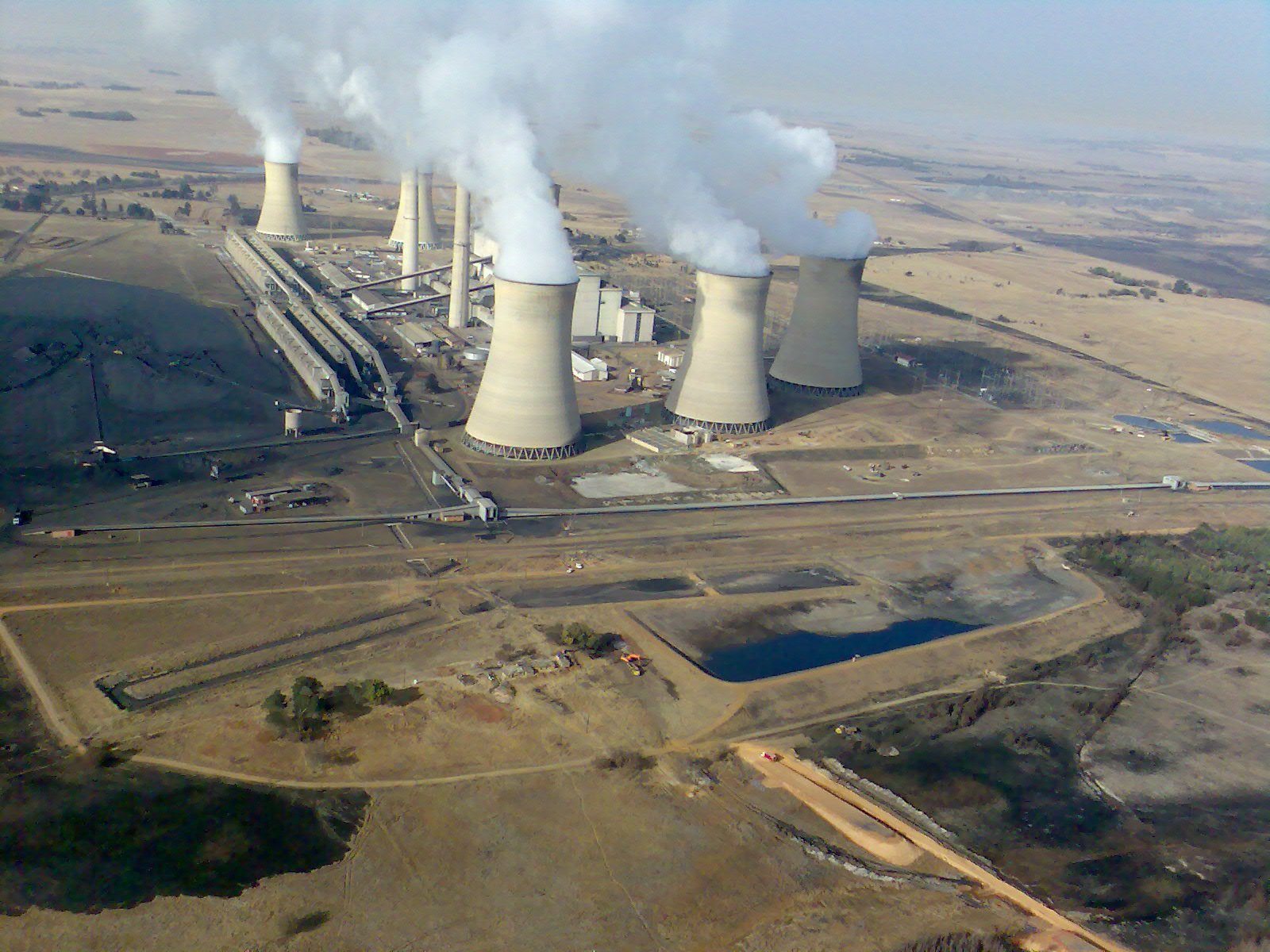
On 1 January the European Union began charging importers for the carbon emitted in making the steel, aluminium and cement they buy from abroad. For South Africa — whose factories draw on the most coal-intensive grid of any major exporting economy — that levy lands harder than almost anywhere else. The first certificates are not due until February 2027, but the meter is already running, and Trade, Industry and Competition Minister Parks Tau told a Cape Town audience on 26 May that the bill is coming whether the country is ready or not.
The Carbon Border Adjustment Mechanism (CBAM) crossed from rehearsal to reality on 1 January 2026. Since 2023 it had operated as a reporting-only regime: EU importers of carbon-intensive goods declared the embedded emissions of their consignments but paid nothing. The definitive phase changes the verb from report to pay. Importers of iron and steel, aluminium, cement, fertilisers, electricity and hydrogen must now buy and surrender CBAM certificates matching the greenhouse gases embedded in those goods, priced in line with the EU Emissions Trading System — currently around €70 to €100 per tonne of carbon dioxide.
Brussels has staggered the cash impact. Under the simplification package the Council approved in late 2025, the obligation to buy quarterly certificates for goods imported during 2026 is deferred to February 2027, and a new de minimis threshold exempts any importer bringing in under 50 tonnes of covered goods per year. That package was designed to drop the smallest importers while still capturing the overwhelming majority of emissions, so the volumes that matter — bulk steel coil, primary aluminium ingot — sail straight past the exemption.
This is not a peripheral market. The EU remains South Africa's single largest trading partner, and CBAM strikes precisely the heavy, energy-intensive lines where local producers have competed on price rather than carbon footprint.
The mechanism is, at root, a tax on the electricity that goes into a product — and South Africa's electricity is dirty by global standards. The carbon intensity of locally produced iron and steel runs at roughly 0.91 kilograms of CO₂-equivalent per dollar of output, against about 0.16 for the equivalent European product. For aluminium the gap is starker still: 0.32 in South Africa versus 0.07 in the EU. A South African mill and a German one can ship physically identical steel, and the South African cargo will carry a CBAM charge several times larger — for no reason other than the coal burned to power the furnace.
The exposure is concentrated and material. Roughly 16% of South Africa's iron and steel exports and around 25% of its aluminium exports are at risk under CBAM, and the affected basket amounts to about a tenth of everything the country sells into Europe — close to 0.8% of GDP. That places South Africa among the twenty economies most exposed to the mechanism anywhere in the world. As the Daily Maverick argued on 1 June, the real liability sitting on these balance sheets is not a line in a tariff schedule but the carbon intensity of Eskom's grid, now being priced into the landed cost of every tonne a manufacturer loads at Durban or Coega.
For a steel exporter the translation is brutally simple. At €80 a tonne of CO₂ and an embedded intensity multiples above the European benchmark, the certificate cost can erase the thin margin on which much of the country's flat-steel trade survives — and, as Minister Tau noted, the premium does not stop at the factory gate but follows the product through a logistics chain that is itself fossil-fuelled.
It is tempting to read the February 2027 deferral and the 50-tonne threshold as breathing space. They are not, for the firms that count. South Africa's CBAM problem lives in exactly the high-volume product lines that the exemptions were written to exclude, so the practical effect for ArcelorMittal-scale shippers is nil. The clock that matters — the one logging verified emissions through 2026 — is already ticking.
The more seductive misreading concerns South Africa's own carbon tax. CBAM allows an importer to deduct any carbon price already paid in the country of origin, and South Africa has levied a carbon tax since 2019, headline rate now R308 per tonne — well above the R120 per tonne at which it launched. On paper that should shield local exporters. In practice it barely registers: the domestic regime is so riddled with basic and trade-exposure allowances that the effective rate most heavy industry actually pays is a small fraction of the headline, leaving little to set against a full-freight EU certificate. The deduction is real; the credit is thin.
Nor is diplomacy a plausible escape hatch. Pretoria, like Beijing and New Delhi, has called CBAM a unilateral green protectionism that offloads Europe's decarbonisation costs onto developing-world producers — a respectable argument that will not undo a mechanism now anchored in EU law. Any business model that depends on a successful WTO challenge or a bilateral exemption is a model betting against the house.
The companies that lose to CBAM will be the ones that keep treating it as a trade dispute to be lobbied away. It is not. It is a measurement-and-decarbonisation problem with a hard deadline, and it rewards the firms that act like it. The first move is unglamorous but decisive: get installation-level emissions independently verified now, because a producer who cannot document a low number is charged at a punitive default, while one who can prove cleaner output turns that data into a pricing advantage over dirtier rivals.
The second move is structural. Every megawatt of verified renewable supply a manufacturer can wheel onto its furnaces — through a private power-purchase agreement or self-generation — directly lowers its embedded intensity and therefore its European certificate bill. That is the real return on grid reform, and it reframes Eskom's coal fleet as the country's single largest export liability rather than merely a domestic reliability headache. Minister Tau is right that the answer is green steel, beneficiation and renewables; he is too sanguine about the speed at which South Africa is delivering them.
CBAM will not collapse South African heavy industry overnight — the deferral and the slow phase-out of free EU allocations buy a few years. But the trajectory is fixed and the direction is one-way. The exporters who spend 2026 measuring and decarbonising will still be shipping to Europe in 2030. The ones who spend it waiting for the rules to change will be competing on a cost base that Brussels has quietly, and permanently, raised. The adversary here was never the European Commission. It is the load factor on a coal-fired grid.