The Symbiotic Paradox: AI, Supply Chains and South Africa
AI is sold as the fix for broken supply chains — but the buildout strains…
Washington's 10% surcharge on South African goods lapses on 24 July, and USTR's proposed forced-labour successor sets 12.5%. Exporters face a higher baseline.
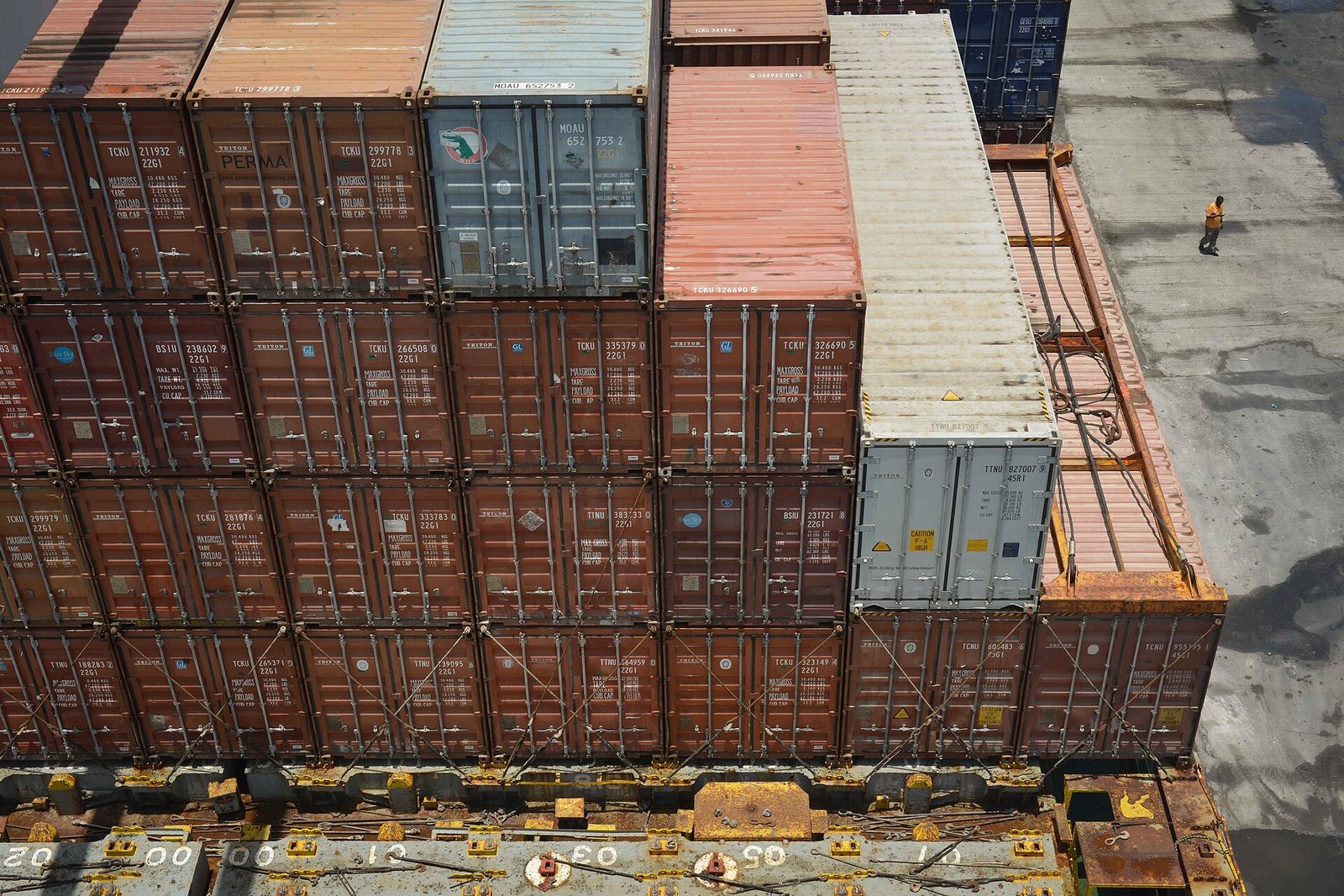
The temporary 10% tariff that has shielded South African exporters from Washington's harshest measures is set to lapse on 24 July, and the mechanism lined up to replace it is not a reprieve but a step up. On 7 July the Office of the US Trade Representative (USTR) held its hearing on a Section 301 "forced-labour" action that would impose a 12.5% duty on goods from 54 economies — South Africa among them. For anyone shipping platinum, wine or vehicles into the world's largest consumer market, the baseline cost of doing so is about to rise once more, and the window to prepare is measured in days.
Two clocks are running down at once. The first is the so-called Section 122 surcharge — a flat 10% ad valorem duty that took effect on 24 February 2026 after the US Supreme Court's ruling on the earlier IEEPA tariffs. Section 122 carries a hard statutory life of 150 days, which means it expires by operation of law on 24 July 2026, with no further action required to end it.
The second clock is the successor being readied to fill the gap. On 12 March 2026 the USTR opened a Section 301 investigation into 60-odd economies over their failure to prohibit the import of goods produced with forced labour. Its findings, published in June, concluded that 54 economies — South Africa included — have no explicit legal prohibition on such imports. The proposed remedy is a 12.5% ad valorem duty on countries that neither ban forced-labour goods nor commit to doing so, and 10% for those that make the commitment. Written comments closed on 6 July, the hearing was held on 7 July, and USTR faces a completion deadline of around 20 July. For roughly 46 countries, this 12.5% Section 301 duty is explicitly framed as the replacement for the expiring Section 122 surcharge — meaning South Africa's baseline tariff into the United States would move from 10% to 12.5% rather than fall away.
A 2.5-percentage-point rise sounds modest, and in isolation it is. The difficulty is that it lands on top of the sector-specific measures that already do the real damage: a 25% duty on South African-built vehicles and 50% on steel and aluminium, neither of which the forced-labour action touches. The extension of the African Growth and Opportunity Act (AGOA) to 31 December 2026 offers no shelter here, because AGOA's duty-free preference operates in parallel with these surcharges rather than overriding them — the preference has, in practical terms, already been hollowed out for South Africa's most valuable US-bound goods.
The automotive numbers show what that hollowing looks like. In 2024, vehicles alone accounted for 64% of South Africa's AGOA trade with the United States, worth more than $1.6 billion (roughly R28.6 billion). US Census Bureau data then recorded South African vehicle exports to the US falling from R26.5 billion in January–July 2024 to R9.8 billion over the same months of 2025 — a 62% collapse — as the 25% auto duty stripped away the duty-free advantage that made BMW's Rosslyn-built X3 and X4 competitive. Platinum tells a quieter story: South Africa supplies more than 70% of the world's platinum, so US buyers have limited room to switch origin, and the extra 2.5 points will largely pass through to landed prices. For wine exporters, the same rise widens an already painful gap against Chilean and Australian producers who ship into the US duty-free under their own trade agreements.
The practical task for importers and their South African suppliers is unglamorous but urgent: recalculate landed cost on a 12.5% baseline for any goods clearing US customs after 24 July, confirm rules of origin and HS classifications so nothing is mis-declared into a higher line, and reprice or renegotiate contracts that were struck against the 10% assumption.
The comforting reading is that AGOA's renewal buys South Africa breathing room until year-end. It does not. AGOA governs preferential access; the Section 122 and Section 301 surcharges, and the Section 232 metal and auto duties, sit outside that framework and stack on regardless of AGOA status. A renewed preferential trade agreement that cannot suppress the surcharges above it is a diminished asset, not a safety net.
There is also a route to the lower 10% band that South Africa has, so far, declined to take. USTR's own proposal offers the reduced rate to economies that commit to prohibiting forced-labour imports. Rather than move toward such a commitment, Minister of Trade, Industry and Competition Parks Tau has asked Washington to produce evidence that South Africa is actually importing forced-labour goods — the nature of the goods and their countries of origin — before Pretoria responds. That is a defensible legal posture, but it is a slow one: even a commitment would require legislative drafting, and evidence of the kind Tau wants is unlikely to be furnished on a four-day timetable. With USTR's decision expected around 20 July and Section 122 lapsing on 24 July, the greater near-term risk is not the 2.5 points itself but the pricing paralysis that uncertainty breeds when buyers cannot commit to contracts they cannot cost.
South Africa should stop treating the forced-labour action as an accusation to be litigated and start treating it as a toll to be minimised. The marginal cost of legislating a forced-labour import prohibition — a measure most trading nations already have and one entirely consistent with South Africa's own labour law — is trivial next to the tariff differential it unlocks, and holding out for evidence risks locking exporters into the higher 12.5% band for no commercial gain. Exporters, meanwhile, should not wait for Pretoria: price new US contracts on a 12.5% basis now, hedge rand exposure on the dollar receipts, and accelerate the diversification toward AfCFTA and European Union markets that the past eighteen months have made unavoidable. The 10% era was always borrowed time. The task now is to make the 12.5% floor as low and as predictable as it can be — and to stop pretending AGOA will do that work for us.