SA Slaps Tile Duties of up to 231% on India and Three Neighbours
SARS has imposed provisional anti-dumping payments of up to 231.62% on ceramic and porcelain tiles…
SARS gazetted a provisional anti-dumping duty on large-diameter steel pipe from Mozambique on 18 June — the first in this steel cycle aimed at a SADC neighbour.
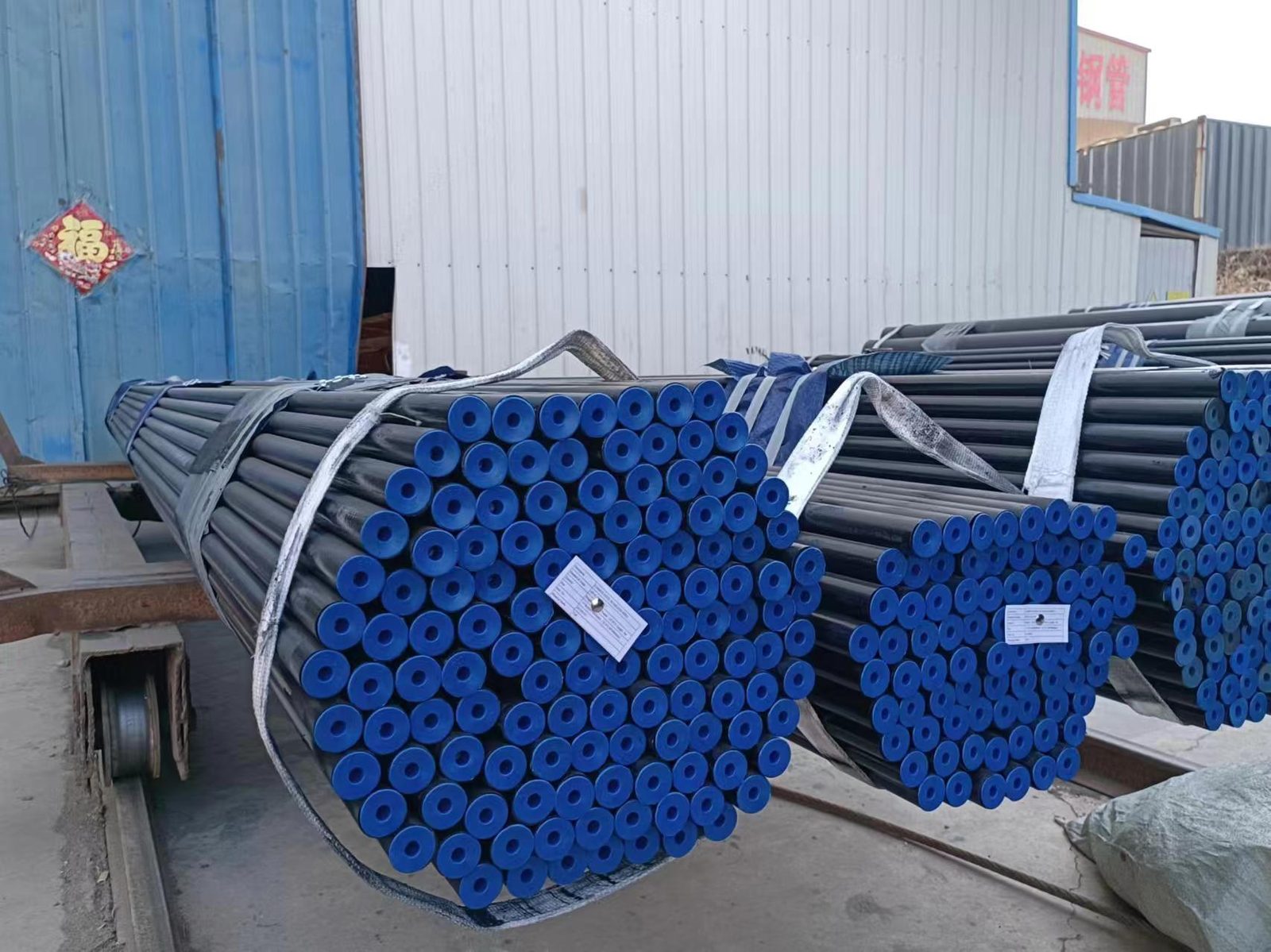
South Africa has opened a new front in its steel war, and this time the target sits inside the neighbourhood. On 18 June the South African Revenue Service gazetted a provisional anti-dumping duty on large-diameter steel pipe from Mozambique — the first time in this cycle that Pretoria has aimed a country-specific trade remedy at a fellow member of the Southern African Development Community free-trade area. For the contractors who build the pipelines that move the country's water, slurry and fuel, a critical input has just been put on notice.
Acting on the recommendation of the International Trade Administration Commission (ITAC) in its Report 779, SARS imposed a provisional anti-dumping duty on tubes and pipes of circular cross-section with an external diameter exceeding 406.4 mm, of iron or steel — pipe larger than roughly sixteen inches across. The measure falls under tariff subheading 7305.19 and carves out longitudinally submerged-arc-welded and longitudinally welded pipe, narrowing its bite to a specific manufacturing class. Crucially, it names a single origin: the Republic of Mozambique.
The instrument matters as much as the target. A provisional payment is not a final duty but a cash deposit the importer lodges at clearance while ITAC completes its investigation, refundable if the final determination lands below the provisional rate. Under South African anti-dumping rules a provisional measure may run for a maximum of six months, setting the clock on when a definitive duty — or a refund — must follow. It is a surgical tool: unlike the World Trade Organisation safeguard on flat-rolled coil that took effect on 12 June at 52.34% across every origin at once, an anti-dumping duty hits dumping from one named country and leaves the same product from everyone else untouched.
It does not arrive in isolation. The same wave has produced the flat-rolled safeguard under Report 768, a rise in the anti-dumping duty on polyethylene terephthalate from China to 43.77%, and provisional action against structural U, I and H steel sections — layered on the construction-steel duties imposed on China and Thailand earlier this year. Report 779 is one more brick in the most aggressive run of South African steel protection in a generation, but the first to single out a SADC partner.
Large-diameter welded pipe is not a discretionary purchase; it is the spine of heavy infrastructure. It carries bulk water across the transmission schemes a drought-prone country cannot defer, moves slurry on the mines, and forms the pressure lines of fuel and gas networks. Every one of those projects books the pipe through a landed-cost calculation, and the provisional payment lands straight on that line. The deposit is payable up front, at clearance, before a single metre is laid — so the immediate hit is to working capital, not just the final invoice. For an engineering, procurement and construction contractor on a fixed-price water or mining contract priced before 18 June, an unbudgeted deposit on a core material is a margin event, not a rounding error.
The practical response is twofold. Importers with Mozambican pipe in transit or on order should confirm the gazetted provisional rate against each consignment and model the deposit into their next drawdown, since the duty bites on the customs value at entry. Those with flexibility should requalify supply now — domestic mills first, then non-named origins outside Report 779 — while accepting that large-diameter pipe is specification-heavy: switching supplier means re-certifying welds, coatings and pressure ratings, not just signing a new order. Exporters face the same logic, as any local fabricator using imported pipe as an input now carries a higher base cost into a market where margins are already thin.
The comfortable reading is that this simply rewards local pipe-makers and reshores demand. Two things complicate it. First, a country-specific remedy only works if domestic capacity can absorb the displaced volume at the required diameters, tolerances and lead times; where it cannot, the duty does not localise production so much as raise the cost of building the very water and energy infrastructure the state has made a priority. A trade remedy that taxes pipeline steel during a national water crisis is a policy pulling against itself.
Second is the regional contradiction. South Africa is the loudest champion of the African Continental Free Trade Area and an architect of the SADC free-trade area, yet it has now turned an anti-dumping gun on a neighbour's exports. The legal defence is real — an FTA removes ordinary customs tariffs but expressly preserves the right to apply trade remedies against dumping, so Report 779 breaks no treaty. The strategic cost is harder. Mozambique is a transit partner, a corridor host and a gas supplier; signalling that its industrial exports can be met with provisional duties at the border sits awkwardly beside the integration story Pretoria sells in every continental forum. And because the measure is provisional, it could yet be unwound: if ITAC's final determination finds the dumping margin smaller than the provisional rate, importers who posted deposits are repaid — but only after the cash has been tied up for months.
On the narrow merits, ITAC is within its rights and likely within the evidence — dumping investigations are not opened on a whim, and a provisional payment is a defensible bridge while the final numbers are tested. But the timing and the target make Report 779 more than a routine filing. Imposing a deposit on large-diameter pipe while the country races to fix its water transmission backbone, and doing it to a SADC partner while preaching continental free trade, exposes the central tension in South African trade policy in 2026: a protective reflex on steel now outrunning the industrial and regional strategy it is meant to serve.
For importers the instruction is unambiguous. Treat the provisional rate as a live cost from clearance, not a contingency, and price new contracts accordingly. Audit your bill of materials for any 7305.19 pipe of Mozambican origin and open a parallel qualification on domestic and non-named supply before the six-month window forces the decision for you. And watch the final determination, because the gap between the provisional payment and the definitive duty is where the refunds — or the permanent cost increases — will be settled. The steel wall has reached the neighbourhood; build your sourcing on the assumption it stays up.