New SARS Customs Codes for Copper, Abalone, Batteries — Comment by 18 August
SARS's "technical" tariff amendments re-code copper scrap, abalone, lithium cells and steel from 1 January…
South Africa signed rail access agreements with 11 private freight operators on the day Cape of Good Hope diversions hit record levels — a defining convergence.
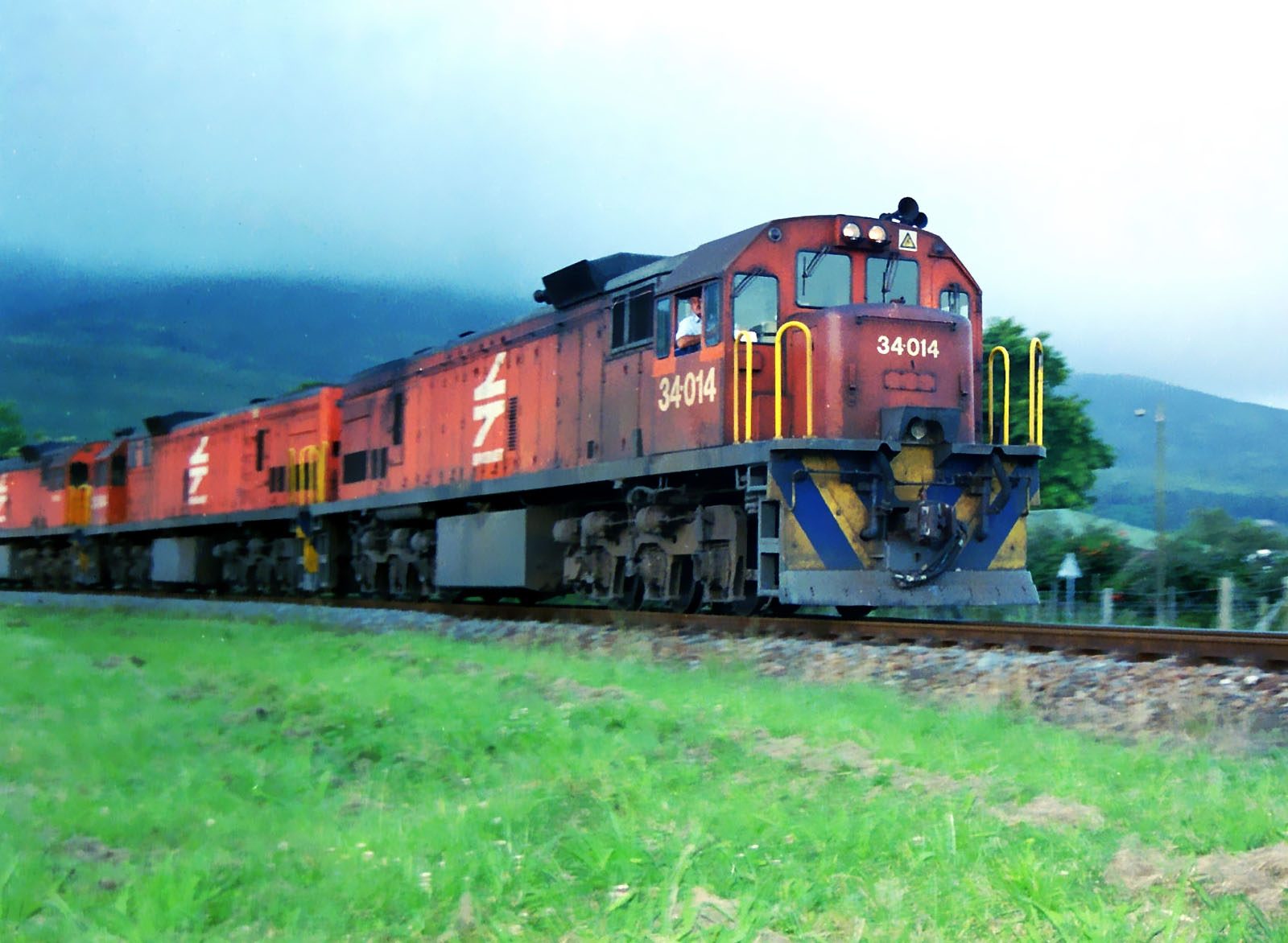
JOHANNESBURG — On the same morning that Railway Gazette International published the words "It is time to rail" in South Africa, the country's freight logistics sector was already feeling the weight of two simultaneous forces: a decade-long structural reform finally turning into binding law, and a global shipping crisis conspiring — almost generously — to flood more cargo through its ports than ever before. May 20, 2026 will not be forgotten quickly in ZA supply chain circles.
The Transnet Rail Infrastructure Manager (TRIM) has formally concluded Rail Access Agreements (RAAs) with 11 private Train Operating Companies (TOCs), opening South Africa's national freight rail network — for the first time in its post-apartheid history — to meaningful private competition. The list of signatories reads like a Who's Who of southern African freight: ARC South Africa, MSC, Grindrod, Menar, and Motheo Logistics, among others. Each has now earned the right to put its own wheels on Transnet's tracks.
The headline figure is 24 million tonnes of additional freight capacity injected into the network immediately, scaling to 52Mt over five years, against the government's stated target of 250Mt per annum by 2030. For context, Transnet Freight Rail currently moves roughly 160Mt annually — a figure that has been declining, not growing, for most of this decade. The 250Mt goal was widely dismissed as aspirational fantasy eighteen months ago. It still is, in some quarters. But today's signings are the first concrete mechanism that might prove the sceptics wrong.
One detail buried in the announcement deserves more attention than it is getting: the Ad Hoc Slot mechanism. TRIM has introduced a rules-based process that allows it to allocate rail capacity outside the rigid annual planning cycle, responding to real-time market signals. The first practical deployment of this system will be a short-haul Cato Ridge–Durban service, set to begin before the end of May, specifically designed to shift containers off the N3 and ease the chronic road congestion that has been throttling the Durban port precinct. That is not a pilot project — it is a live fix to a live problem, built into the architecture of the new regime from day one.
South Africa did not plan to become the world's emergency detour. But here it is. The partial closure of the Strait of Hormuz — triggered by the ongoing US-Israeli military operation — has diverted an estimated 70% of what was Red Sea container traffic onto the Cape of Good Hope route. Cape Town's port recorded a 112% surge in diverted vessels in March alone, and the numbers have not meaningfully retreated since.
For a very large crude carrier or a 20,000-TEU containership, each Cape detour adds roughly USD 400,000 to 800,000 in bunker costs. For South African ports, that same detour means more unscheduled calls, more bunkering revenue, more ship repair work, and more container volumes moving through terminals that have — not entirely coincidentally — just received meaningful crane upgrades. Durban remains the anchor; Cape Town is the beneficiary. Both are busier than they have been in years.
The irony is not lost on anyone in the sector. For half a decade, South Africa's logistics crisis was defined by empty container depots, vessel blank sailings, and shippers rerouting away from South African ports because of congestion and unreliability. Now the world has handed the country a volume windfall at precisely the moment its rail reform is coming online to absorb it. The stars are aligning — but stars do not do the operational work.
Bloomberg's April assessment of the reform trajectory deserves to be read alongside today's celebratory announcements: "South Africa's reform drive loses steam as rail and ports lag." The gap between agreements signed and wheels turning is where South African reform has historically gone to die.
TRIM has set an ambitious but honest timeline: some operators aim to have trains running before the end of 2026; the remainder are expected to be operational during 2027. That means the 24Mt capacity injection is not available today — it is a forward commitment. In the interim, the road network continues to carry the load, fuel costs are rising, and the Cato Ridge–Durban corridor remains chronically congested.
France's development agency AFD has provided a measure of financial scaffolding: a €300 million loan signed this week to support Transnet's Freight Decarbonisation and Corporate Sustainability Programme. That money is earmarked for efficiency improvements and low-carbon transition — not operational rescue funding — which suggests international creditors see the structural reform as credible, even if they are not betting on it becoming frictionless.
TradeCaravan's assessment: this is the most significant structural shift in South African freight logistics since the National Ports Act of 2005. The combination of private rail access, a €300m decarbonisation loan, the Hormuz-driven shipping windfall, and port infrastructure upgrades gives South Africa a window it has not had in a generation. The window is real. Whether the country climbs through it is another matter entirely.
For importers and exporters, the practical near-term implication is straightforward: Durban-bound cargo from Gauteng is about to have more modal options, and the first Cato Ridge–Durban rail service should be watched closely as a proof of concept for whether the Ad Hoc Slot mechanism functions as advertised. If it does, the case for shifting bulk and container freight back to rail — and off the N3's potholed surface — becomes commercially compelling rather than merely ideologically desirable.
The 250Mt target by 2030 remains a stretch. But for the first time in a long time, the direction of travel is correct, the legal framework is in place, and the global shipping map is, however temporarily, in South Africa's favour. This is not the finish line. This is what the beginning of a genuine turnaround looks like.