A New War Reopened the Cape Window South Africa Was Told Was Closing
In June we reported carriers were returning to Suez and South Africa's Cape windfall was…
Cape diversions jumped 112% during the Red Sea crisis, yet SA's bunker volumes fell. With carriers returning to Suez, the window to bank the windfall is closing.
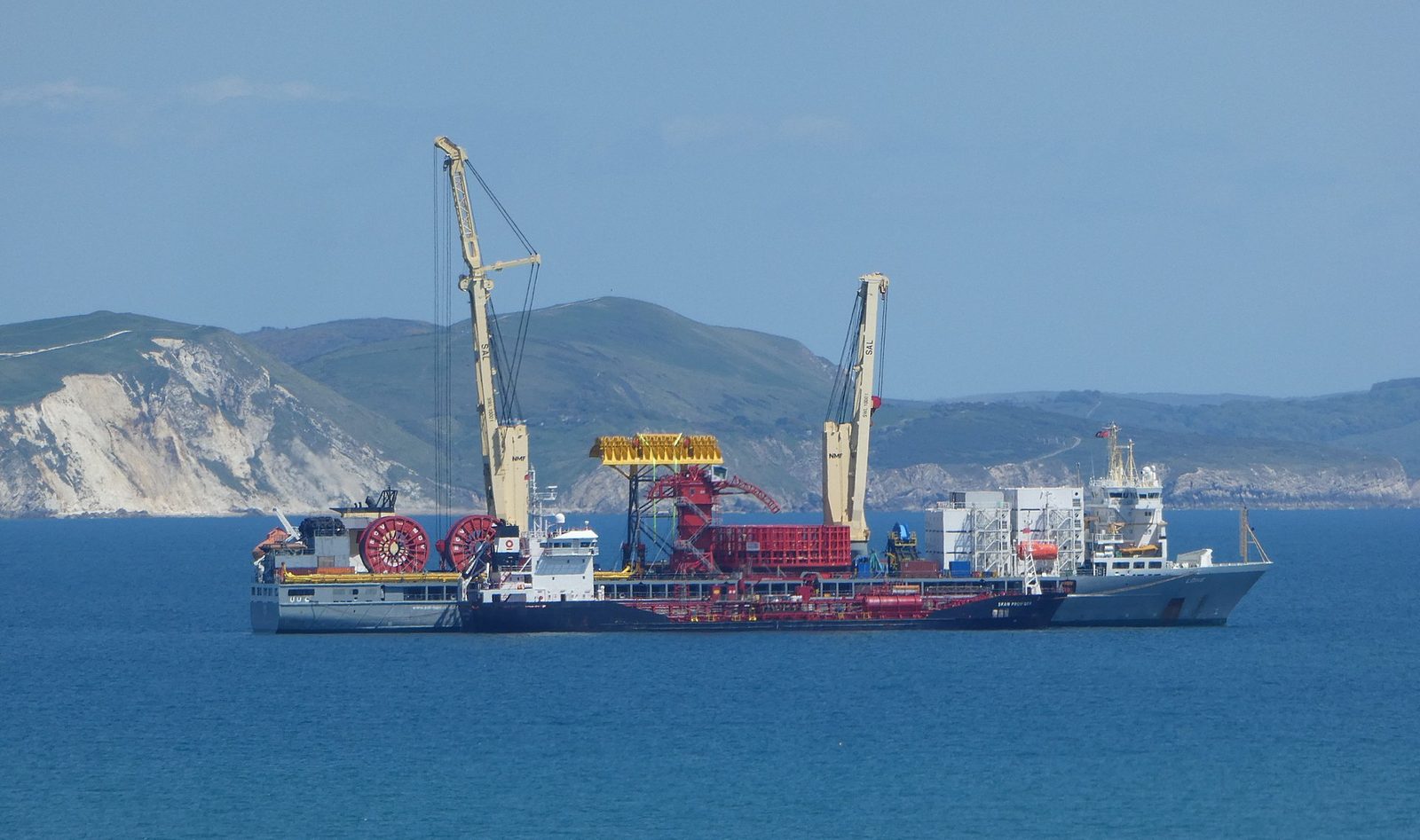
South Africa sits astride one of the busiest detours in global shipping, and for the better part of two years it has barely charged a toll. Diversions around the Cape of Good Hope are up more than a hundred per cent on pre-crisis levels, yet the country's bunker fuel sales have fallen, not risen. Now the detour itself is unwinding: the carriers that abandoned the Suez Canal in 2023 are beginning to sail back through it, and the window for South Africa to monetise the traffic streaming past its coastline is narrowing by the month.
The Red Sea diversion is the largest peacetime re-routing of global trade in living memory. Since Houthi attacks closed the Bab-el-Mandeb to most box carriers in late 2023, Asia–Europe and Asia–US East Coast services have been routed around the southern tip of Africa, adding ten to fourteen days to each leg. The Cape Chamber of Commerce and Industry reported that diversions past the South African coast were up 112% by early March 2026. On paper, every one of those vessels is a potential customer for fuel, stores, repairs and crew changes.
The second force is the reversal. CMA CGM, the most aggressive of the majors, has signalled a full switch back to Suez routing during the second quarter of 2026. Maersk and Hapag-Lloyd resumed limited transits through the canal on their Gemini network from mid-February, taking what Maersk calls a stepwise approach rather than a clean break — though Maersk quietly reversed two of those Gemini routes back around the Cape in late February, citing unresolved security constraints, underscoring how precarious the corridor remains. The Suez Canal Authority expects traffic to return to normal levels in the second half of this year. The practical implication for South Africa is stark: peak Cape traffic is happening right now, and from here the curve bends downward.
Here is the uncomfortable part. Despite the 112% surge in vessels rounding the Cape, there has been no matching surge in arrivals at Durban or Cape Town. Almost every diverted ship transits the South African coast without stopping. More damningly, national bunker fuel volumes have moved the wrong way — from roughly 130,000 tonnes a month before the crisis to around 80,000 tonnes today. A country handed a captive audience of the world's largest container ships has managed to sell them less fuel than before.
The business has gone elsewhere. Namibia's Walvis Bay and Mauritius's Port Louis have expanded their bunkering and turnaround capacity, and a roster of international suppliers — Vitol, Monjasa, Peninsula and others — is growing its presence in the region around South Africa rather than within it. For a country running a current-account deficit with the rand at roughly R16.55 to the US dollar, this is hard-currency revenue from ship chandling, refuelling and repairs that simply is not being banked.
The root cause is not geography but shore-side friction. South Africa's offshore bunkering hub at Algoa Bay — once the country's largest, moving an estimated 50,000 to 100,000 tonnes a month — collapsed after SARS detained five bunker barges in September 2023, alleging that operators had registered fuel as transshipment rather than dutiable imports. The bunker barges left the country and have not returned in force. The Maritime Business Chamber put the loss to the fiscus at around R7 billion. SARS issued new licensing rules in December 2024, but the regulatory uncertainty had already done its work: ships learned to refuel before or after South Africa, and habit is hard to break.
The hopeful reading, heard often in maritime circles, is that the Cape routing is a windfall waiting to be captured if only the policy were fixed. That reading underestimates the timing and the economics. The window is short. Once Suez normalises in the second half of 2026, the structural premium evaporates: the same congestion that lifted Asia–Europe long-term contract rates 40% to 60% above pre-crisis baselines (Xeneta, early 2026) is precisely what made marginal bunkering volumes profitable, and it disappears with the diversion. Reform that lands in 2027 arrives after the tide has gone out.
The competitive reality is no kinder. Bunkering is a capital-heavy, compliance-intensive, thin-margin trade. Operators do not relocate fleets and storage on the strength of a twelve-month opportunity, and they certainly do not return to a jurisdiction that detained their vessels without a settled, predictable licensing regime in front of them. Walvis Bay and Port Louis hold a first-mover advantage and the regulatory certainty South Africa cannot manufacture quickly enough to matter before the cargo recedes. Even a crash programme to revive Algoa Bay would be racing a clock that is already nearly run down.
The Cape windfall was always oversold, and it is now effectively spent. South Africa was never going to convert a temporary security crisis into a durable maritime-services boom in the time available, and the numbers prove it — a doubling of passing traffic produced a one-third fall in bunker sales. That is not bad luck. It is a verdict on competitiveness.
The honest lesson is not "capture the diversion" but rather what the diversion exposed: South Africa's maritime offer is uncompetitive even when the world's ships are delivered to its doorstep. The fix that matters has nothing to do with chasing transient transit volumes and everything to do with the structural reasons vessels refuse to stop — the unresolved Algoa Bay licensing impasse, port turnaround times that remain among the slowest of any major economy, and a SARS posture toward offshore bunker operators that reads as adversarial. Resolve those and the country earns from the next disruption and, more importantly, from steady-state trade. Leave them, and Walvis Bay keeps the business long after Suez reopens.
Importers and exporters should not expect the Cape diversion to rebalance freight economics in their favour, and certainly should not bank on cheaper South African bunkering as a structural advantage. As Suez normalises through the second half of 2026, expect Asia–Europe rates to ease and Cape transit premiums to fade — a modest tailwind for landed costs — while the deeper problem stays exactly where it was. The Cape did not fail South Africa. South Africa's shore-side did.