A New War Reopened the Cape Window South Africa Was Told Was Closing
In June we reported carriers were returning to Suez and South Africa's Cape windfall was…
Transnet's Fuel Neutrality Charge falls to R52 a container on 1 August — but the cut only returns it to its floor, hard-wiring a diesel-indexed cost into every box.
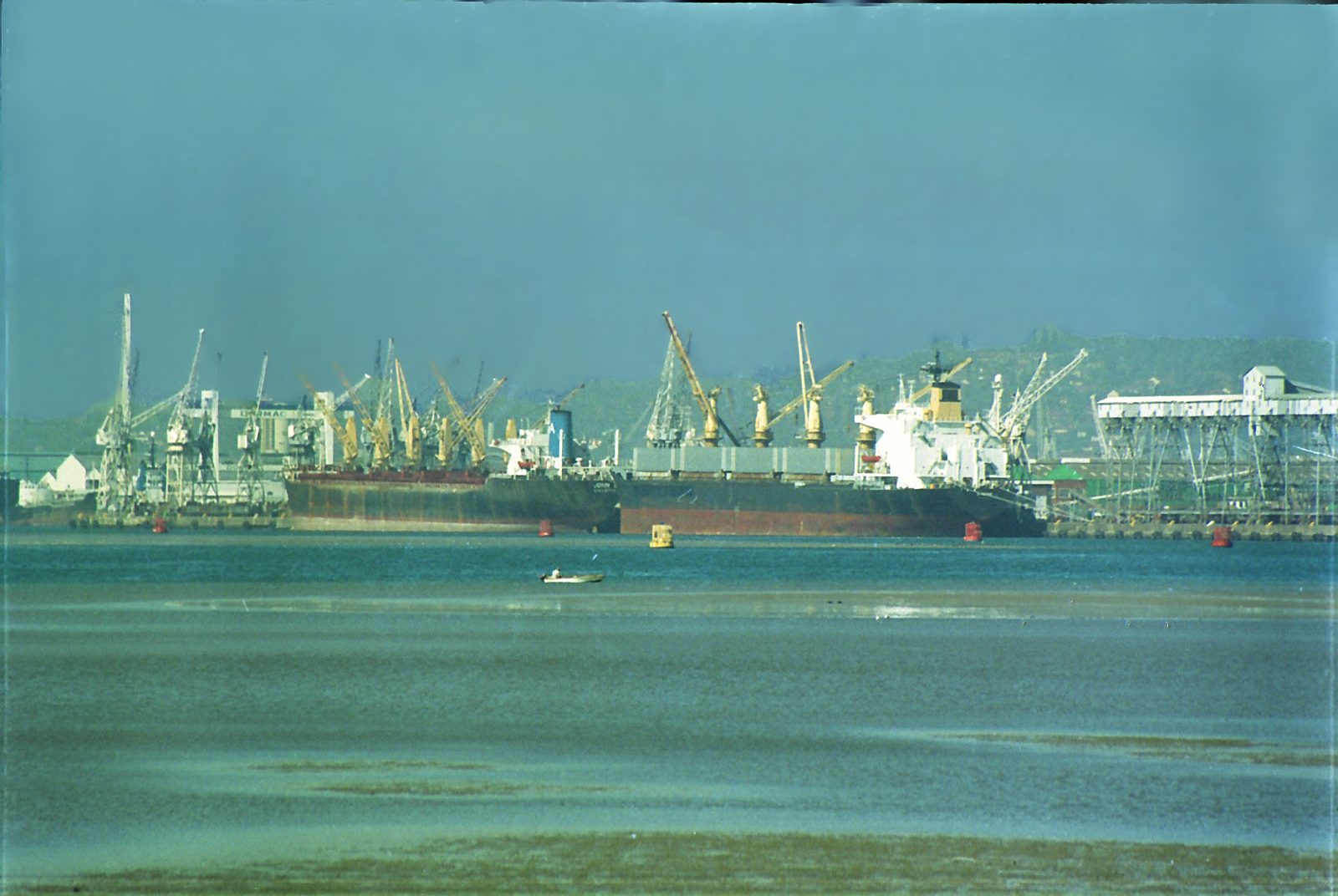
From 1 August, every laden box crossing a Transnet Port Terminals quay will carry a R52 Fuel Neutrality Charge — down from the R78 that has stung shippers since June. The reflex is to read that R26 climbdown as relief. It is not. The August reassessment merely drops the levy back to the R52 baseline it launched at in May, which means the charge has not retreated so much as settled in — a permanent, diesel-indexed line item that shipping lines bill straight through to the cargo owner.
Transnet Port Terminals introduced the Fuel Neutrality Charge on 1 May 2026 across its own terminals and the Durban Gateway container operation, at a founding baseline of R52 per container. It is not a flat fee. The charge tracks a coastal diesel index reassessed on the seventh of each month and applied to every container on vessels berthing from the first of the following month. When the index read R30.30 a litre in early May — inflated by the war premium that had been sitting in fuel prices all year — the applicable charge jumped to R78. It held at R78 through June and July.
The July reassessment tells a quieter story. Coastal diesel had eased to R23.91 a litre by 1 July, roughly a fifth below its May peak, as bunker and diesel prices retreated with Brent crude. Under the formula, that pulls the August charge back to R52. Transnet's general manager for commercial and planning, Michelle van Buren Schele, has described the levy as a temporary cost-recovery mechanism for the diesel that powers straddle carriers, rubber-tyred gantries, hauliers and generators — not, in her framing, a profit measure. The number moving down is the formula doing exactly what it was built to do.
The charge is small per box and unavoidable at scale. It is levied on every container entering or exiting the terminal, so a TEU that arrives full and later leaves full is touched twice. An importer clearing 100 boxes a month carries R5,200 in Fuel Neutrality Charge alone in August; over a year at the R52 floor that is more than R62,000 before a single box moves faster. And it does not sit on the invoice by itself. Shipping lines pass it through — Maersk has already confirmed it will recover the surcharge from customers — where it stacks on top of the terminal handling charge, the bunker adjustment factor and statutory cargo dues.
For the importer trying to hold a landed cost figure steady, the practical problem is not the R52 — it is that the R52 is a floating input dressed up as a fixed one. A charge that swung from R52 to R78 and back inside ninety days cannot be pencilled into a quarterly cost model with any confidence, and it moves on a calendar the cargo owner does not control. The line that reads "fuel surcharge" on the freight invoice is now three overlapping levies deep, and only one of them appears on any published tariff schedule.
The optimistic read is that the charge is modest, falling and honestly explained. The gap in that read is the word neutrality. A neutral cost-recovery mechanism would rebate the customer when Transnet's own diesel bill falls; this one does not. R52 is the base, and the formula only ever adds to it — so when diesel is cheap, the shipper still pays the floor, and when diesel is dear, the shipper pays the floor plus the spread. The Road Freight Association has publicly questioned whether a charge that in practice only travels in one direction, onto the customer, can fairly be called neutral. On the evidence of its first three months, the levy has been a one-way valve.
The timing sharpens the point. Transnet is telling the market it is fixing itself: its ports handled more than 300-million tonnes in 2025/26 — its best in fifteen years, on a 9% rise in vessel traffic — its turnaround team has just been handed another six months, and the R11-billion ICTSI concession at Durban Container Terminal Pier 2 is meant to signal a new era of private-sector discipline. A utility courting private capital and rebuilding shipper confidence has, in the same breath, hard-wired a permanent pass-through cost into the very customers it is trying to win back. That is not fatal, but it is a strange note to strike while the ministerial-overrun headlines — a fuel pipeline whose cost has ballooned to R28.2-billion — are still fresh.
Treat the August cut as arithmetic, not a gift, and plan around three things. First, model your Q4 landed cost at the R52 floor rather than the R78 peak, but hold a contingency for the index climbing again — diesel's retreat is a loosening war premium, not a structural fall, and the formula will follow it straight back up. Second, audit the fuel lines on your carrier invoices box by box: with the Fuel Neutrality Charge, the bunker adjustment factor and terminal handling all recovering "fuel," the risk is paying for the same litre twice, and the surcharge is easy to under-scrutinise precisely because it is small. Third, if you run round-trip laden legs, budget the charge twice, not once — the terminal does.
The larger call is this: stop treating the Fuel Neutrality Charge as a temporary war-era surcharge and start treating it as furniture. It is now a fixed cost of using a South African port, indexed and permanent, and it will outlast the conflict that justified its debut. The response is not to absorb it quietly but to price it in openly, name it in your rate negotiations, and press — through your line and your association — for the one thing a genuinely neutral levy would already have: a published formula that can fall below its own floor.