New SARS Customs Codes for Copper, Abalone, Batteries — Comment by 18 August
SARS's "technical" tariff amendments re-code copper scrap, abalone, lithium cells and steel from 1 January…
A mid-August system cutover at Durban Gateway Terminal cut weekly throughput 26% and pushed vessel waits past 12 days — on the quay that clears 40% of SA's boxes.
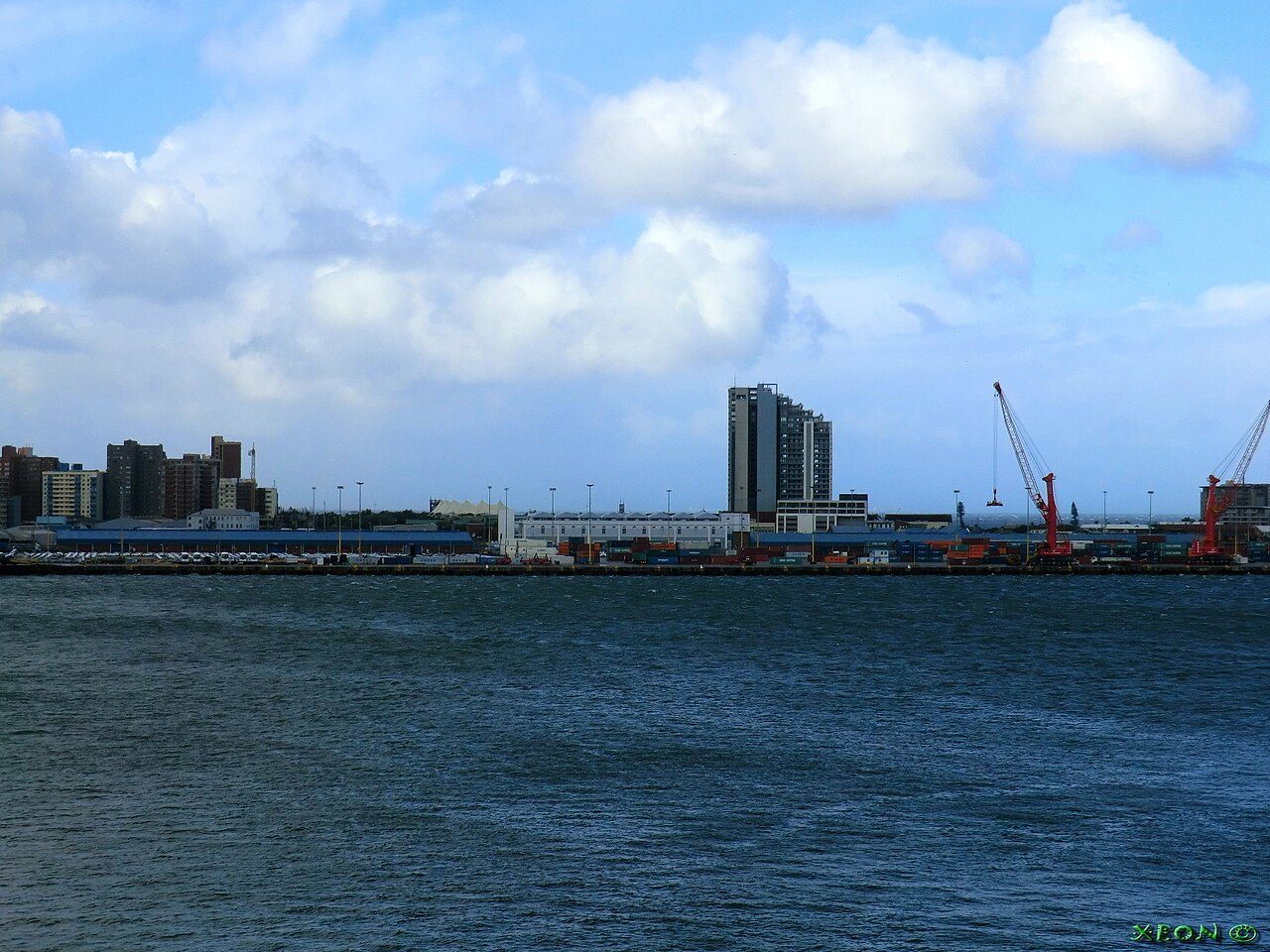
On 15 August the terminal that clears more than four in every ten South African containers switched to a new operating system over a weekend — and by the following Friday its weekly throughput had fallen 26%. Within a fortnight the average port call at Durban Gateway Terminal had stretched from under five days in late June to more than twelve, some lines were reporting eight-to-twelve-day waits, and the Southern African Association of Freight Forwarders had escalated what it called an "operational crisis" to the Presidency. This is the same quay the industry spent the first half of 2026 celebrating as the country's proof that privately-run terminals work.
Durban Gateway Terminal — the former Durban Container Terminal Pier 2 — has been run since the end of 2025 by International Container Terminal Services Inc (ICTSI) under a 25-year concession, with Transnet retaining the majority stake in the joint venture. On 15 August DGT cut over from Transnet's shared platform to its own independent instance of Navis N4, the terminal operating system that assigns every stack slot, crane move and truck booking. The migration did not go cleanly. The terminal initially ran at roughly 70% of capacity, and weekly volumes dropped by more than a quarter in the week that followed.
The numbers behind the queue are stark. Vessel data cited by freight forwarders shows anchorage waiting time at Durban roughly doubling — from an average of 80 hours in July to 166 hours, close to seven days, in early August — with a further 116 hours at berth on top of that. Kuehne + Nagel put the Pier 2 wait at eight to twelve days against three to four at the neighbouring Pier 1. DGT declared the system "stable" on 26 August with a "hypercare" team still clearing residual faults, but a stable system is not a cleared backlog, and the ships that piled up while it was unstable are still working through the anchorage.
Crucially, the operator itself concedes the software was only part of it. DGT has acknowledged that booking availability, yard and stack fluidity, equipment reliability and landside truck evacuation all degraded together. The cutover was the trigger; the fragility was already in the system.
For an importer, a port that takes twelve days to do a five-day job is not an inconvenience — it is a bill. The landed cost of a container is not just freight and duty; it is every day the box sits somewhere accruing a charge, and this crisis has lit up two of those charges at once. Demurrage — the shipping line's penalty for a container overstaying its free time inside the terminal — starts running the moment free days expire, and a vessel stuck at anchor for a week burns most of that free time before the box is even landed. Detention, the separate charge for holding the line's empty equipment too long outside the port, then bites on the way out, because trucks cannot collect on schedule when slots are released in rolling 24-hour windows reviewed every four hours.
DGT has waived its own terminal storage charges until stability returns, and released truck slots more flexibly — but that waiver covers only the fee the terminal controls. The shipping lines' demurrage clock and the empty-container detention clock are contractual and keep ticking unless each line separately grants relief, which DGT has asked them to do but cannot compel. Standard Transnet Port Terminals storage on a 20-foot box already escalates from roughly R320–R400 a day in the first tier to R700 and beyond for long overstays; layered on top of line demurrage on a delayed TEU, a two-week delay can turn a routine consignment into a four-figure cost overrun before the goods reach the warehouse. Road hauliers are absorbing the rest: the Road Freight Association's Gavin Kelly put it plainly, saying transporters are "carrying this crisis on their balance sheets" as trucks queue unpaid for cargo that is not ready.
The optimistic reading is that this is transitional pain — the unavoidable cost of pulling a strategic terminal off a legacy Transnet platform onto a modern, operator-controlled one. ICTSI's wider portfolio grew throughput 16% year-on-year to 8.12 million TEU in the first half of 2026, Durban included, so the operator can plainly run terminals well. Declare the system stable, clear the backlog, and by the fourth quarter Durban is faster than it was.
That reading skips over three things. First, "stable on 26 August" is a claim about the software, not the queue; the anchorage does not empty because a database stops throwing errors. Second, the operator's own admission that yard fluidity, equipment and landside evacuation all failed at once means the problem is not a one-off configuration bug but a terminal running without the slack to absorb a shock — and a system with no slack will break again at the next one. Third, the concession structure splits accountability: ICTSI operates but Transnet holds the majority, so a recovery that needs both the operator's execution and the state shareholder's landside and rail cooperation has two hands on the wheel and a Presidential delegation now sent to referee. SAFLA and the RFA have gone as far as proposing a formal recovery compact — a sign that industry does not trust the "it's stabilising" line to hold on its own.
The lesson of Durban's August is not that privatisation failed — it is that a single terminal handling 40% of the nation's container trade has no margin for a bad weekend, whoever runs it, and importers should price that fragility in rather than assume the concession has engineered it out. Concretely: for any box due through Durban in September and October, build in an extra seven to ten days of dwell and treat published ETAs as fiction until the anchorage clears. Get your demurrage free-time position in writing from your line now and ask for the additional free days DGT has formally requested lines grant — the operator has made the case for you. Where a shipment is time-critical, model the cost of diverting it to Ngqura or Cape Town against the demurrage exposure of waiting Durban out. And stop treating the "most-improved port" headline as a planning input: the same terminal that earned it in the first half of the year lost more than a quarter of its throughput in a single week of the second. Resilience, not a ranking, is what protects the invoice.