The Symbiotic Paradox: AI, Supply Chains and South Africa
AI is sold as the fix for broken supply chains — but the buildout strains…
Transnet Port Terminals lifted its fuel neutrality container charge to a record R78 from 1 June — the same week SA's diesel price fell more than R3 a litre.
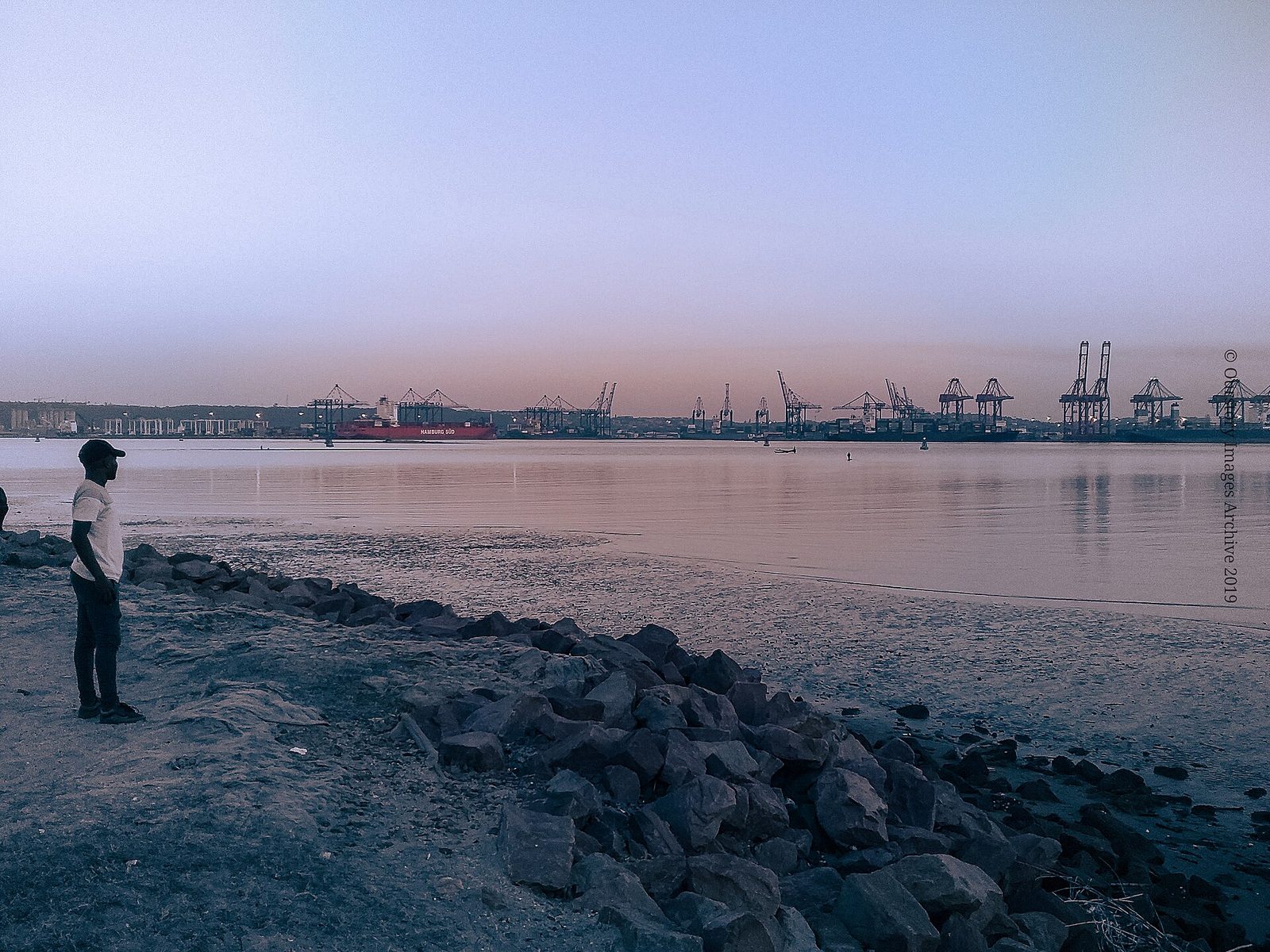
From 1 June, every box crossing a Transnet Port Terminals quay carries an extra R78. The state operator's "fuel neutrality charge" has climbed 50% in a single month — up from R52 on 1 May — and it has done so in the very week South Africa's diesel price was cut by more than R3 a litre. For importers and exporters already swallowing a regulated tariff increase, the timing is hard to defend.
Transnet Port Terminals (TPT) sets the fuel neutrality charge at R78 per container with effect from 1 June 2026, up from the R52 that applied through May. It is levied on every container entering or leaving TPT facilities and the Durban Gateway terminal, and applies to all containers handled on vessels berthing from 1 June — so cargo already booked and afloat is caught by the new rate.
TPT frames the charge as a cost-recovery mechanism for diesel-powered equipment — the straddle carriers, hauliers, rubber-tyred gantry cranes and generators that move boxes when the grid or electrified plant cannot. It is indexed to coastal diesel thresholds derived from the regulated fuel-pricing framework set by the Department of Mineral and Petroleum Resources. Reporting on the mechanism indicates the surcharge can swing between roughly R25 and R176 per container depending on where the diesel index sits, which means R78 is a waypoint rather than a ceiling. Michelle van Buren Schele, TPT's general manager for commercial and planning, has described it as a temporary cost-recovery measure rather than a profit-generating one.
Critically, the charge is additional to the average 7.57% tariff increase the Ports Regulator of South Africa approved for the 2026-27 financial year. Importers are therefore absorbing two upward adjustments at once: a regulated annual tariff rise and a floating fuel levy layered on top of it.
On a single box, R78 reads as trivial against a landed cost that runs into tens of thousands of rand. The problem is that it compounds and it travels. The levy is collected from shipping lines, who pass it to freight forwarders, who pass it to importers, who pass it — eventually — to the South African consumer. An importer clearing 200 containers a month now carries an additional R15,600 in monthly port cost from this line item alone, before the regulated tariff increase is counted. For high-volume movers of building materials, automotive components or fast-moving consumer goods, the annualised figure is material enough to show up in pricing.
For exporters the sting is competitiveness. The charge lands at the height of the citrus export season, when Durban and the Eastern Cape terminals are running at peak throughput and South African fruit is already contending with United States reciprocal tariffs and a narrow AGOA window that expires at the end of December. Every rand added at the quay is a rand of margin surrendered against Peruvian, Egyptian or Spanish competitors who do not face a Transnet fuel levy. The South African Association of Ship Operators and Agents has flagged exactly this ripple — chief executive Peter Besnard noting the charge feeds through the supply chain to consumers and erodes the price position of South African goods abroad.
The deeper operational headache is the floating design. Because the rate resets against a diesel index, importers cannot lock a landed cost more than a month ahead. A quote signed in April on a R52 assumption is 50% adrift by June. For businesses running thin margins on fixed-price supply contracts, that volatility is harder to manage than the absolute number.
The word doing the most work here is "neutrality", and it does not survive contact with the data. Road Freight Association chief executive Gavin Kelly reacted to the charge's name "with mirth", arguing that there is nothing neutral about adding R52 — or any cost — into the logistics chain. A pass-through that only ever points upward for the customer is not neutral; it is a transfer of input-cost risk from a state monopoly to its captive users.
The timing makes the point sharper than any quote. Diesel 0.05% sulphur fell by 324.96 cents a litre — more than R3.25 — with effect from 3 June 2026, on the back of softer international refined-product prices. Yet TPT's diesel-linked surcharge rose to its highest level yet on 1 June. The mechanism is backward-looking: it tracks the coastal index over a prior reference period, so importers are charged a record fuel levy in the very month the pump price collapses. The fair question, which TPT has not publicly answered with a published formula, is whether July's charge will fall as quickly as the May-to-June rate rose — or whether the index ratchets up fast and drifts down slowly.
There is also no competitive check. The arrival of ICTSI as operator of Durban's Pier 2 introduces a private partner at one terminal, but the fuel neutrality charge is a system-wide TPT levy that no shipping line can route around. A monopoly recovering a genuine cost is reasonable; a monopoly recovering that cost through an opaque, lagging index that customers cannot model or contest is a governance problem dressed up as an accounting one.
The principle is sound and the execution is not. Ring-fenced diesel pass-throughs are normal at terminals worldwide, and TPT is right to recover the real cost of running plant on diesel when its energy supply is unreliable. But a transparent surcharge needs three things this one lacks: a published formula, a symmetrical index that falls as readily as it climbs, and enough forward visibility for importers to price a contract. Delivering a record R78 charge in the same week diesel was cut by R3.25 a litre is the clearest possible evidence that at least the first two are missing.
Our advice to importers and exporters is practical. Treat R78 as a floor, not a forecast, and build the full R25-to-R176 band into landed-cost models rather than assuming the current figure holds. Renegotiate supply contracts to allow the surcharge to be passed through explicitly rather than absorbed into a fixed price. And press, through SAASOA and the freight forwarding bodies, for TPT to publish the index and reference period so the charge can be audited against actual diesel movements.
The real test arrives on 1 July. If diesel's R3.25 cut feeds through to a lower fuel neutrality charge, TPT can credibly call the mechanism neutral. If the charge holds at R78 or rises while pump prices have fallen, the name is exposed as marketing, and the case for the Ports Regulator to bring this levy inside its formal oversight — rather than leaving it as a discretionary line item on a monopoly's invoice — becomes very difficult to argue against.