Washington's 12.5% Forced-Labour Tariff Puts SA Exporters on the Clock
The US has proposed an extra 12.5% tariff on all South African goods over a…
In June we reported carriers were returning to Suez and South Africa's Cape windfall was ending. A Houthi blockade of Saudi Arabia on 20 July reversed that forecast.
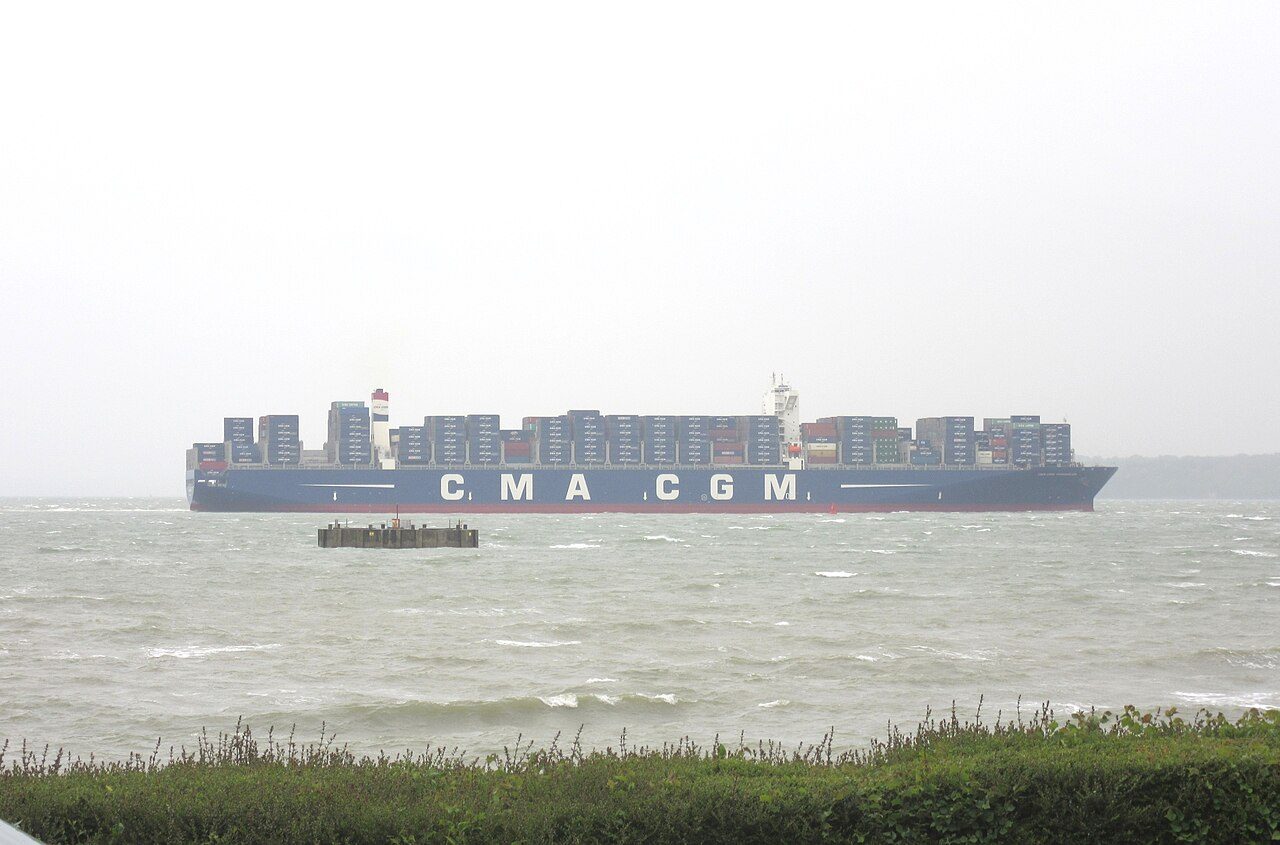
Between 3 and 9 August, 263 vessels transited the Suez Canal — twelve fewer than the week before, and nothing like the recovery the canal's authority was forecasting for the second half of this year. In June this publication reported that the great Red Sea diversion was unwinding, that CMA CGM had signalled a full return to Suez routing and that South Africa's window to monetise the traffic streaming past its coastline was narrowing by the month. That forecast was overtaken by events on 20 July, when Yemen's Houthis declared a naval blockade of Saudi Arabia and reopened a front the shipping market had spent nine months assuming was closed. The Cape detour did not end. It was extended by a war nobody had priced.
The Houthis announced the blockade on 20 July, accusing Riyadh of a siege of nearly twelve years, and resumed attacks on 22 July after a nine-month pause — this time aimed squarely at their longstanding regional adversary rather than at vessels linked to Israel. The group claimed missile and drone strikes on the Saudi tankers Encelia and Layla, both of which caught fire, and later said it had forced the NCC Ghazal to turn back. It is the most serious escalation between Riyadh and the Houthis since the 2022 ceasefire that largely ended Yemen's civil war.
The market effect was immediate and unusually lopsided. Mainstream tanker transits through the Bab el-Mandeb fell about 42% in the week after the declaration, to 53 vessels, and stayed there — 54 in the following week. Total traffic through the strait held up far better, at 266 transits between 27 July and 2 August. In other words, the tanker trade fled and everything else largely carried on, because everything else had never come back.
That asymmetry is the most important thing to understand about August 2026, and it is where the June story went wrong. Container lines had been returning to Suez cautiously and partially — a Gemini service here, a headhaul leg there — while keeping Cape routing as the default for Asia–Europe and Asia–US East Coast. The blockade did not force box carriers out of the Red Sea so much as it removed their reason to finish coming back. Xeneta's assessment is now that a large-scale container return during 2026 is unlikely, with occasional Suez transits during quieter periods treated as exceptions rather than a restored network.
Tankers were exposed differently. A blockade declared against a specific state and its cargoes is a targeting problem rather than a general security problem, and it turns every Saudi-linked voyage through the strait into an identifiable target in a way that a broader threat never did. The shadow fleet kept moving; mainstream owners, their charterers and above all their war-risk underwriters did not. For a South African importer the practical read-across is that this escalation is far more likely to reach you through the fuel price and the bunker adjustment factor than through a box rate.
Container rates are not moving in one direction, and averaging them will mislead you. Drewry's World Container Index rose 1% in the week to 13 August, to $4,339 per 40ft container, but the composite hides a split market. Transpacific rates climbed hard — Shanghai to New York up 10% to $8,706 and Shanghai to Los Angeles up 6% to $6,244 — while Asia–Europe softened, with Shanghai to Genoa down 8% to $5,080 and Shanghai to Rotterdam down 5% to $4,425. Carriers are defending the level with capacity discipline rather than demand: Drewry counted ten cancelled sailings in each of the past two weeks and seven scheduled for the next. Carriers have also announced Panama Canal surcharges on Asia–US East Coast and Gulf services effective September.
For South African importers the immediate exposure is threefold. Cape routing that was supposed to unwind is now the working assumption through year-end, which keeps Asia–Europe transit times ten to fourteen days longer than the Suez baseline and keeps that padding in your lead times. Any oil-price spike transmits into bunker surcharges within weeks and into the rand-denominated fuel price faster than that. And blank sailings at this cadence mean a missed booking is not a week's delay but potentially a fortnight, which is precisely how a landed cost model built on nominal transit times quietly goes wrong.
The June piece argued that South Africa had squandered a windfall it would not get again. The blockade has handed it back, and this time there is at least a licensed operator standing on the quayside. Offshore bunkering at Algoa Bay — suspended since September 2023, when SARS detained five bunker barges alleging operators had registered fuel as transhipment rather than dutiable imports — has restarted, with AMSOL's product tanker Uhambo working under one of two new licences issued after the revenue service published fresh fuel import, storage and export rules in December 2024, backed by a supply agreement with Astron.
The scale of what was lost in the interim is not in dispute. National bunker volumes fell from roughly 130,000 tonnes a month in 2023 to about 80,000 tonnes in 2024, on PwC's numbers, while Port Louis in Mauritius nearly doubled its bunker sales over the same period — from 509,837 tonnes in 2023 to 929,043 tonnes in 2024. Flex Commodities launched physical bunkering at Walvis Bay and Lüderitz. Monjasa's Thorstein Andreasen attributed his firm's growth directly to "the Red Sea security situation causing more vessels to reroute south of Africa". Roughly twenty vessels a day now round the Cape, against six in 2023, and Cape diversions were up 112% by early March on the Cape Chamber of Commerce and Industry's count. Every one of those ships burns fuel it must buy somewhere.
Two lessons, and they point in opposite directions. The first is a caution about our own June call: we treated a carrier-by-carrier return to Suez as a trend when it was a probe, and the market reversed on a single political decision in Sana'a. Anyone building 2027 freight budgets on a normalised Suez should hold that assumption loosely, because the corridor's status is set by belligerents, not by schedules. Plan on Cape routing as the base case through at least the first quarter of next year and treat a Red Sea normalisation as the upside scenario rather than the plan.
The second is that South Africa has been given a rare thing in trade policy — a second attempt at the same opportunity — and the clock on it is a war, which is to say it could stop at any time. The regulatory blockage that closed Algoa Bay was self-inflicted and is now partly resolved; what remains is whether enough licensed capacity can be stood up while the traffic is still there. Three concrete actions for readers. If you charter or fix vessels, get quotes at Algoa Bay now that AMSOL is operating and compare them against Walvis Bay and Port Louis, because bunker prices at a hub trying to win volume back are worth testing rather than assuming. If you import from Asia, hold the ten-to-fourteen-day Cape padding in your lead times through year-end and re-check bookings against the blank-sailing programme before committing to a delivery date. And if you are exposed to Asia–US East Coast or Gulf lanes, budget for the Panama surcharges landing in September rather than disputing them after the fact. Watch one number above the rest: mainstream tanker transits through Bab el-Mandeb. If they recover toward the 90-a-week range, the escalation is being contained and the Cape premium starts unwinding again. If they stay near 53, this is the shape of the market into 2027.