The Symbiotic Paradox: AI, Supply Chains and South Africa
AI is sold as the fix for broken supply chains — but the buildout strains…
A carbon vote in October, AGOA's expiry on 31 December and a 2.8m TEU delivery wave in 2027 matter more to your landed cost than any forecast of the war.
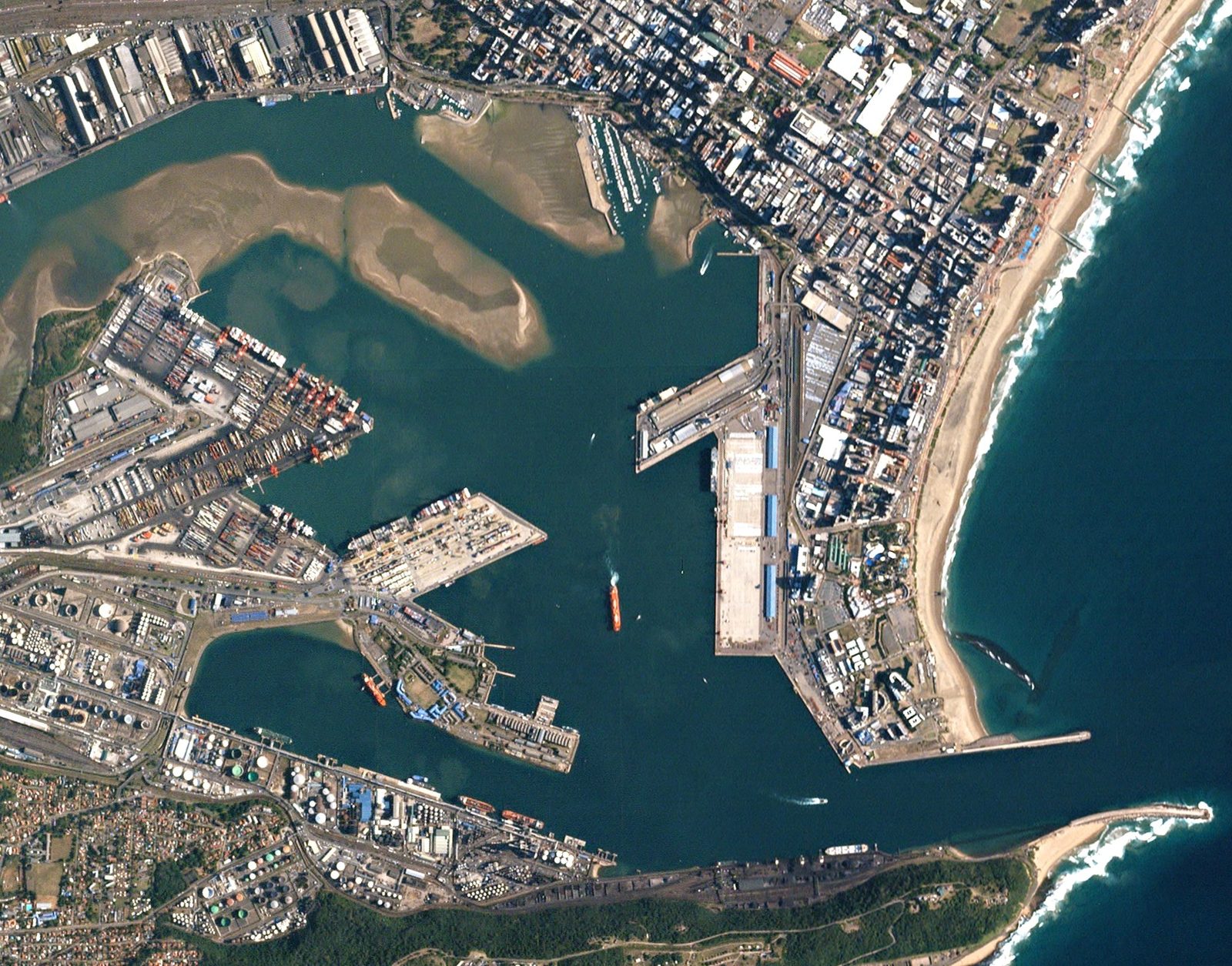
The global container orderbook now stands at 12.3 million TEU, equal to 37% of the ships currently in service, and the yards will hand over 2.8 million TEU of it in 2027 — up from about 1.7 million this year. No war, ceasefire or tariff announcement can cancel a vessel that is already being welded. That is why the three dates that will actually set South African freight and duty costs in 2027 are not battlefield dates at all: a vote in London in October, an expiry in Washington on 31 December, and a delivery schedule in Asian shipyards that was fixed years ago.
On 17 October 2025 the International Maritime Organization did something it had never done before: it postponed, by twelve months, the adoption of its own Net-Zero Framework. The United States, China and a group of developing economies led the call for delay, citing cost, technological readiness and uneven access to alternative fuels. That deferred vote comes back in October — roughly eight weeks from now.
What is on the table is the first legally binding carbon price applied to an entire global sector: a fuel-intensity limit for ships, a pricing mechanism for vessels that exceed it, a global fuel standard measuring emissions across the full lifecycle from production to combustion, and a fund to redistribute the revenue. If it is adopted in October, the mandatory acceptance period means the earliest it can enter into force is 1 March 2028. The practical consequence for a 2027 budget is therefore narrower than the headlines suggest — but not zero, because carriers price anticipated compliance costs into long-term contracts well before the rules bite, and a 2027 contract negotiated after an October adoption will be negotiated by a counterparty that knows what is coming in 2028.
The African Growth and Opportunity Act is living on a short-term reprieve. President Trump signed a stopgap renewal into law on 2 February 2026 that keeps the programme alive only to the end of this year. South Africa retained its eligibility in that renewal — but the 30% reciprocal tariffs imposed on key exports including citrus, steel and wine remain in force, which has already hollowed out much of what eligibility is worth.
Two things follow for exporters. The first is that a preference regime renewed in eleven-month increments cannot support a capital investment decision; it can only support a shipment. The second is subtler and more dangerous: because the reciprocal tariff already nullifies much of the AGOA margin on the headline lines, there is a temptation to treat the expiry as academic. It is not. AGOA still governs duty treatment on lines the reciprocal tariff does not touch, and it carries the rules of origin machinery that determines whether a product qualifies as South African at all. If the programme lapses on 31 December without replacement, that machinery lapses with it.
Now the arithmetic that dominates everything else. Deliveries run at roughly 1.7 million TEU this year, 2.8 million in 2027 and 3.5 million in 2028. Fleet capacity is growing around 4% against demand growth of 2% to 3%. Sea-Intelligence expects the resulting cyclical overcapacity to peak in 2027 at levels last seen during the 2016 price war, though short of the 2009 collapse; Braemar's Jonathan Roach puts average overcapacity near 27% through 2028.
The only thing currently absorbing that surplus is the war. Routing Asia–Europe services around the Cape of Good Hope adds ten to fourteen days to every rotation, which soaks up ships that would otherwise be chasing the same cargo, and carriers have been topping that up with aggressive blank sailings. Remove the detour — a Red Sea normalisation, whenever it comes — and that absorbed capacity returns to a market already scheduled to receive its largest delivery wave in a decade. The peace scenario and the cheap-freight scenario are the same scenario.
For a South African importer this is, on its face, good news, and it should be said plainly: 2027 is shaping up to be the cheapest ocean freight market since 2016. If you are negotiating annual contracts for next year, you are negotiating from the strongest position buyers have had in years, and you should not accept 2026 rate levels as a baseline.
The risk simply moves somewhere else. When carriers lose money they do not fail quietly — they cut sailings, withdraw strings, merge alliances and consolidate port calls, and secondary markets lose service first. South Africa is a secondary market. The 2016 price war is the precedent worth studying: it produced cheap slots, a bankruptcy that stranded cargo worldwide, and a durable reduction in direct-call frequency for ports outside the main trades. The exposure in 2027 is therefore not the rate on the quote. It is whether the service still calls, whether your box gets rolled when a string is cut, and whether the counterparty you signed a twelve-month contract with is still solvent in month nine. That is a landed cost problem expressed as a reliability problem.
Stop forecasting the war and start pricing the schedule. The Red Sea's status is decided by belligerents and cannot be modelled; the orderbook, the AGOA expiry date and the IMO calendar are all knowable today, and between them they will move South African trade costs further in 2027 than any plausible military development. Build the plan on the knowable part.
Four concrete moves for the next quarter. First, negotiate 2027 ocean contracts on the expectation of a falling market — push for shorter tenors or index-linked terms rather than locking twelve months at today's levels, and put schedule-reliability and rollover clauses in writing, because that is where the real 2027 risk sits. Second, diversify carrier exposure across at least two alliances before the consolidation cycle starts, rather than after a string is withdrawn. Third, if you export to the United States, treat 31 December as a hard deadline: confirm which of your lines actually depend on AGOA treatment rather than the reciprocal-tariff lines everyone is watching, and get origin documentation in order now, while the programme is still in force. Fourth, if you are quoting delivered prices into 2028, put a carbon-cost review clause in the contract — an October adoption gives you roughly seventeen months of warning, and a contract signed without one absorbs the cost in your margin. Watch the October IMO session and the composition of the December AGOA debate. Those two calendar entries, not the Bab el-Mandeb transit count, are what your 2027 costs will hinge on.