New SARS Customs Codes for Copper, Abalone, Batteries — Comment by 18 August
SARS's "technical" tariff amendments re-code copper scrap, abalone, lithium cells and steel from 1 January…
Courts, a penguin settlement and one ecolabel now shape Cape fishing more than stock assessments — and the ecolabel governs the 67% of hake we export.
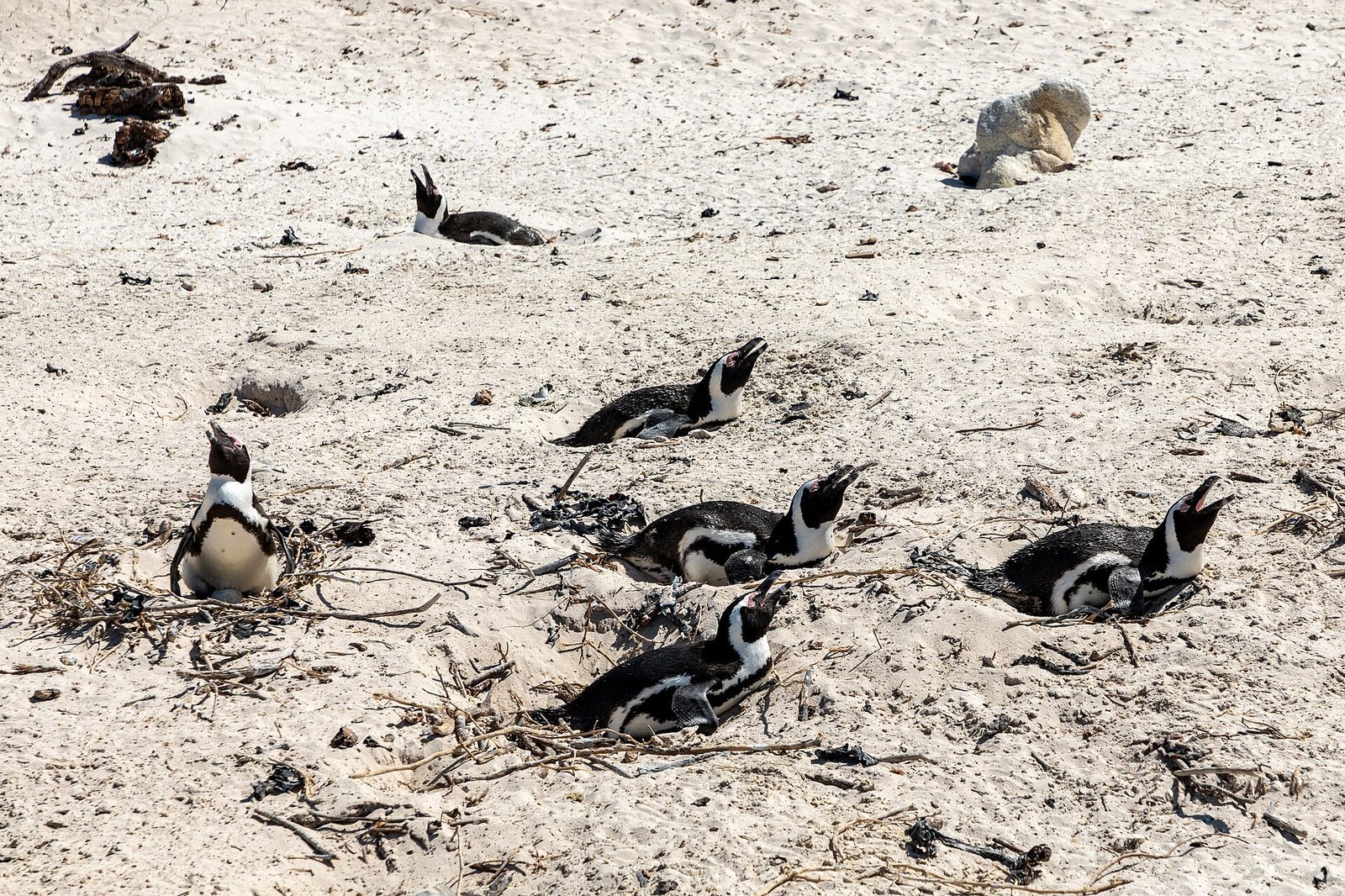
Every South African purse-seine vessel chasing sardine and anchovy now fishes under permit conditions that bar it from six stretches of water around African Penguin breeding colonies — closures a court ordered renewed each January for ten years, running to 2035. The industry did not lose that access to a stock assessment or a quota cut. It lost it to a settlement agreement made an order of the Pretoria High Court on 18 March 2025. That is the pattern worth understanding about the Western Cape's fishing future: the decisions that will determine which boats are still working in 2030 are being taken in courtrooms, appeal files and certification audits, and only loosely in the sea.
Fishing rights in South Africa are supposed to be allocated administratively, through the Fishing Rights Allocation Process. In practice litigation has become the decisive step. The 2021/22 round drew 2,473 applications across nine commercial sectors — hake deep-sea trawl, hake longline, south coast rock lobster, small pelagics, KwaZulu-Natal crustacean trawl, demersal shark longline, squid, tuna pole-line and traditional linefish — and the disputes it generated over scoring and appeals have outlived the process itself.
The squid case is the clearest illustration. The Department of Forestry, Fisheries and the Environment set aside 15% of the squid total allowable effort for small-scale fishers, leaving 85% with the commercial fleet, and the industry association SASMIA went to court to overturn it. The Western Cape High Court dismissed the application, and the 15% stood — against a stated policy intention, announced in 2021, of eventually raising the small-scale share to 25%. More recently Forestry, Fisheries and Environment Minister Willie Aucamp upheld appeals by small-scale co-operatives in the traditional linefish and West Coast rock lobster sectors for the 2026/27 season, a decision his own department called unprecedented. Whatever one thinks of the redistribution, the operational point for anyone financing a vessel or a factory is that the size of a commercial allocation is now a contingent legal outcome rather than a settled administrative one.
The penguin closures matter for the same structural reason. BirdLife South Africa and SANCCOB brought the case; the commercial sardine and anchovy purse-seine industry settled; the State endorsed it; the court made it an order. The department had two weeks to implement it through permit conditions, and those conditions renew every January until 2035 — the year by which the African Penguin is projected to be extinct. Six colonies across the west coast, the southern Cape and Algoa Bay are now surrounded by no-take zones.
The timing is unkind. South Africa's anchovy biomass is at its lowest observed level in fifteen years, even as sardine and round herring have been recovering, and pelagic quotas have already been cut in recent seasons — squeezing the canning and fishmeal plants and the coastal towns built around them. An industry facing a weak stock and a decade-long spatial closure at the same time is an industry whose consolidation is a question of when, not whether.
Here is the part that gets least attention and matters most commercially. Hake is the anchor of the whole sector: roughly 120,000 tonnes caught a year, a fishery worth close to US$200 million, and about 67% of the catch exported rather than eaten locally. That export trade runs overwhelmingly into Europe, and it runs on a certificate — the Marine Stewardship Council ecolabel the fishery first earned in 2004, making it the world's first certified hake fishery, and has since renewed for a fourth term.
European retail buyers increasingly treat MSC certification as a condition of listing rather than a marketing bonus. Economic work on the fishery has estimated that losing it could reduce the value of the hake trawl sector by roughly a third over five years. That is a larger and faster loss than any plausible quota cut, and unlike a quota it can happen at an audit rather than over a season. A fishery whose access rules are being rewritten by litigation, whose fishing grounds are being closed by settlement and whose stock science is under strain is a fishery carrying more certification risk than it did five years ago — and it is the export earnings, not the domestic plate, that would take the hit.
For anyone in the trade chain around this industry, three exposures follow. The first is cold chain. Two-thirds of the country's most valuable catch leaves in reefer containers through Cape Town — a port with a documented record of weather delays and equipment constraints — and frozen hake that loses its temperature record loses its market, not just its freshness. Reefer plug availability and terminal dwell are not operational details in this trade; they are the difference between a sale and a claim.
The second is documentary. Seafood into the European Union carries catch certification and health attestation obligations on top of the ordinary tariff paperwork, and South African product enters under the SADC-EU Economic Partnership Agreement, which means origin evidence has to be right as well. A consignment stopped at an EU border post for a documentation defect is a total loss on a chilled line and a costly delay on a frozen one. The third is concentration risk: West Coast rock lobster, the third most valuable fishery, sits at under 1.2% of its pre-fishing biomass and sells overwhelmingly into a single market, China, where poached product competes with licensed product at prices around R150 a kilogram for lobster and R1,000 for abalone. A legal exporter is competing with a criminal supply chain for the same buyers.
The optimistic story about Western Cape fisheries is aquaculture, and it is real but small. Marine aquaculture output runs at roughly 3,600 tonnes across abalone, Pacific oyster, mussels, dusky kob and seaweed, with about 1,700 tonnes of abalone a year and the two big Hermanus farms, Abagold and HIK, together producing over 400 tonnes. The Agriculture Development Enhancement Programme offers cost-sharing grants up to R40 million per company from an R800 million pot. That is a genuine growth path, but 3,600 tonnes against a 120,000-tonne hake fishery is not a replacement for the wild-capture sector — it is a supplement, and anyone presenting it as the answer to a shrinking quota is selling something.
The honest forecast is consolidation with a market-access tail risk. Expect fewer, larger commercial rights-holders; expect the small-scale share to keep rising through appeals and judgments rather than policy announcements; and expect the pelagic sector to shrink around the closures. Three things worth doing now. If you buy, ship or insure South African seafood, verify MSC chain-of-custody status on your supply lines this season rather than assuming it, because the certification is the market access and it is the fastest thing in this picture that could change. If you move reefer cargo through Cape Town, treat plug availability and terminal dwell as a priced risk in your landed cost rather than an operational assumption, and check your insurance actually responds to a temperature excursion caused by port delay. And if you are financing anything in this sector, price the legal contingency explicitly: an allocation that can be revisited on appeal is not the same asset as one that cannot. The single signal to watch over the next twelve months is the next MSC audit outcome on the hake trawl fishery. Quota politics will grind on either way; certification is the one that would reprice the entire export trade in a single announcement.