New SARS Customs Codes for Copper, Abalone, Batteries — Comment by 18 August
SARS's "technical" tariff amendments re-code copper scrap, abalone, lithium cells and steel from 1 January…
Transnet closes the Durban–Gauteng rail line for maintenance from 25 August just as vessel queues creep back to Durban — a squeeze at both ends of the same box.
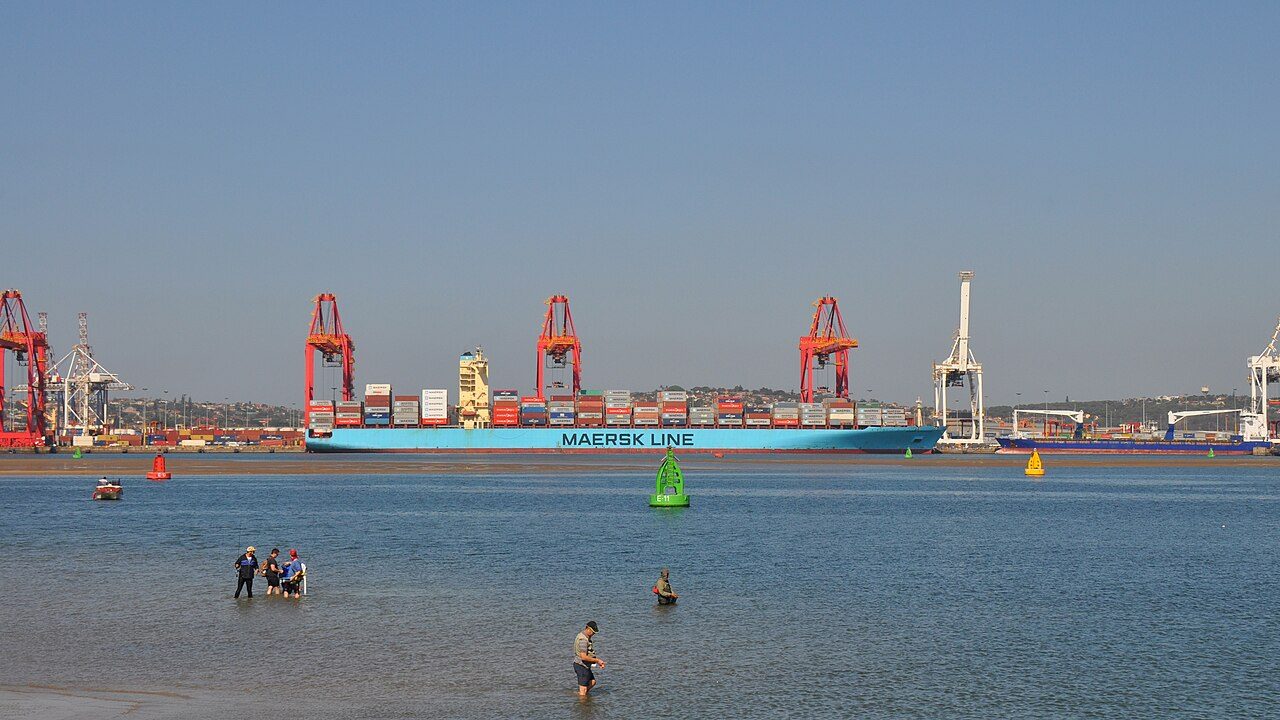
From 25 August, Transnet Freight Rail shuts the Natal Corridor — the Durban-to-Gauteng railway that hauls the bulk of the country's containerised imports off the coast — for nine days of track maintenance, reopening only on 2 September. It does so in the same fortnight that vessel queues have quietly returned to Durban's anchorage, even after the port moved a third more boxes than it had a month earlier. Importers now face a pinch at both ends of the same journey: a harder berth to reach by sea, and a closed rail line inland once the cargo lands.
The two pressures are separate in cause but they arrive together. On the water, Freight News reported on 6 August that national container throughput had risen 33% month-on-month and 22% year-on-year, with the terminals averaging 7 224 TEUs a day against a target of roughly 7 800 — a genuine recovery in volume. Yet the queues came back anyway. Nimi Ramchand, an alternate director and consulting port engineer, framed the problem precisely: "high utilisation leaves very little margin for error." The Durban Container Terminal is running close to the limit of what its cranes, yard and gates can absorb, and its Durban Gateway operation lost time in early August to difficulties around a Navis terminal-operating-system change. When a port is that tight, a good month and a bad week can coexist.
On land, the shutdown is routine engineering with un-routine timing. The Natal Corridor runs from the port of Durban up to the inland container terminal at City Deep in Johannesburg, the single busiest general-freight rail line in the country and the natural evacuation route for imports headed to Gauteng's factories and warehouses. Taking it out of service for nine days is defensible maintenance — track that is not maintained fails unplanned, which is worse — but it removes the rail option for every box landing at Durban across the window, and it does so while the quayside is already congested.
For an importer with cargo afloat or already discharged, the shutdown converts into cost through three channels. First, containers that would have railed to City Deep must instead move by road, and road haulage from Durban to Gauteng is materially more expensive per box than rail — a premium that lands straight on landed cost for anything arriving between 25 August and 2 September. Second, road capacity is finite: a nine-day surge of diverted volume tightens truck availability and pushes rates up further, so the importer who books late pays twice over. Third, boxes that cannot move at all sit in the terminal, and the clock that matters there is unforgiving.
That clock is free time. Once a container's free days at the terminal expire, demurrage and container detention begin to accrue — daily charges that escalate the longer the box is stuck, and that a rail shutdown makes far more likely by removing the fastest way to clear the yard. Shipping lines may also layer a port congestion surcharge onto Durban calls if queues persist. None of these are visible on the commercial invoice at order time, which is exactly why they hurt: they arrive as a September surprise on cargo priced in July.
The obvious rejoinder is that South African rail is being fixed. In May, Transport Minister Barbara Creecy announced that eleven private train operating companies had concluded access agreements to run on Transnet's network, a genuine milestone expected to add around 20 million tonnes of freight a year from the 2026/27 financial year and, over five years, as much as 52 million tonnes of capacity. The government's stated aim is to lift rail volumes to 250 million tonnes a year by 2030, from roughly 165 million now. That is the right direction, and it matters.
It does nothing for the box landing at Durban next week. The first private operators are weighted toward bulk and mineral corridors, most begin running only through 2027, and none of them replaces Transnet as the maintainer of the Natal Corridor track that is being closed. Third-party access changes who pulls the trains; it does not add a second railway alongside the one under repair. The reform story and the shutdown story are both true, and conflating them is how a planner talks themselves out of acting. The nine-day gap is real this year, on this line, regardless of how many operators signed agreements in May.
The one piece of macro comfort is the currency. The rand has firmed to around R16.00 to the dollar, up more than 8% over the past year, which trims the base cost of dollar-priced imports even as domestic logistics adds to it. But a firmer rand does not clear a queue or reopen a line — it simply means the extra rands spent on trucking and demurrage buy back a little of what the exchange rate gives. It is a cushion, not a fix.
Treat the 25 August–2 September window as a known hazard and plan around it rather than through it. Three concrete moves. One: for cargo you still control, avoid landing high-value or time-sensitive containers at Durban inside the window if a later arrival or an alternative port is workable — and where cargo is already afloat, book road haulage to Gauteng now, before the diverted volume prices the trucks you need out of reach. Two: reprice September arrivals honestly. Model landed cost at road-haulage rates plus a buffer for demurrage and a possible congestion surcharge, not at the rail assumptions your July quotes were built on; a shipment that looked marginal on rail can turn loss-making on road. Three: work the free-time clock — confirm each container's free days with the line, prioritise clearance and collection of anything approaching expiry, and do not let a box that could have moved sit accruing daily charges because nobody was watching the calendar.
The deeper lesson is the one Ramchand named. A system running with no margin for error does not need a crisis to disappoint — a good month, a busy quay and a scheduled repair are enough. Rail reform will eventually widen that margin. Until it does, the importers who come out ahead are the ones who treat every planned outage as a cost line to be managed, not a headline to be read.