
Durban's Backlog Is Now a Demurrage Bill — and Importers Are Paying
A software switch at Durban's biggest terminal has cut throughput by a quarter, and the…
SAAFF/BUSA Cargo Movement Update No. 303 (dated 11 October 2026, covering 5 to 11 October with the DGT position updated to 15 October) reports 11 vessels at anchorage at Durban Gateway Terminal, with average waits of about 251 hours at anchorage and 127 hours alongside.
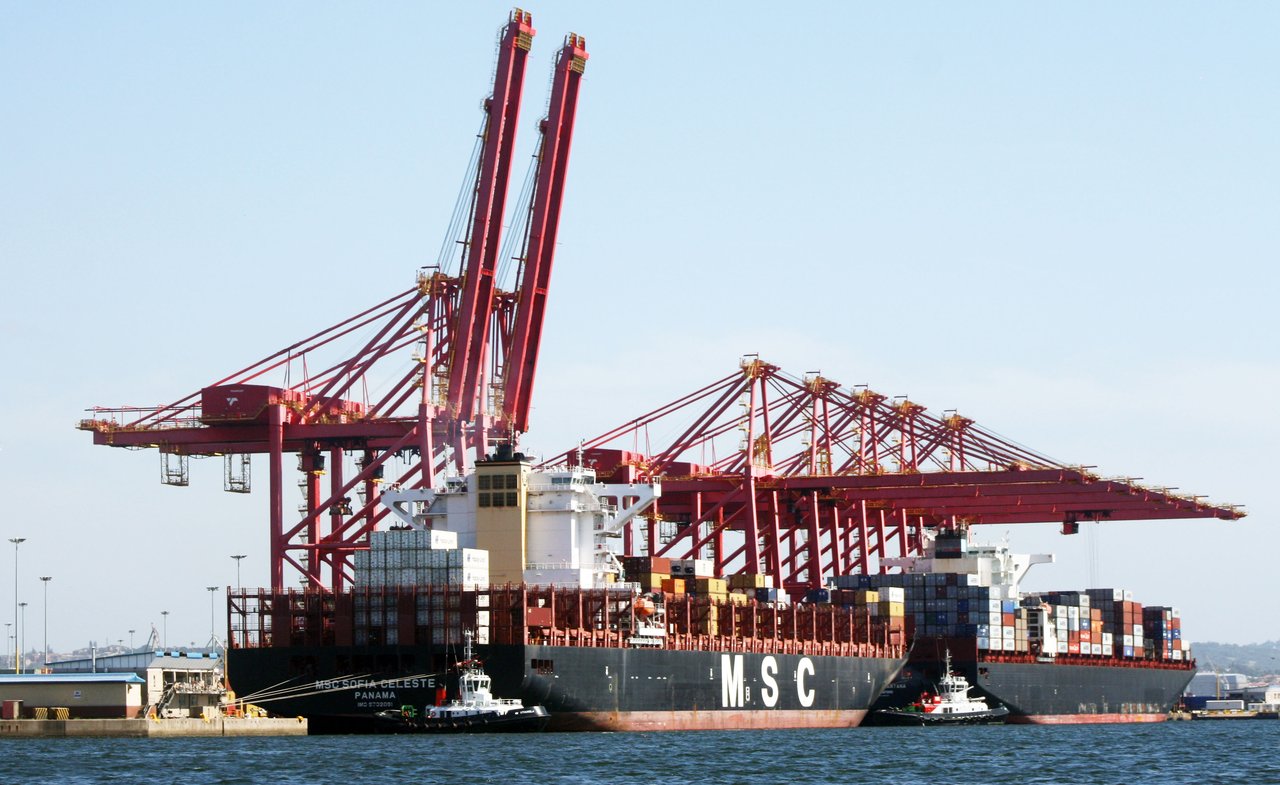
Ships calling at Durban's main container terminal are waiting longer, not shorter.
The Southern African Association of Freight Forwarders (SAAFF) Cargo Movement Update No. 303, distributed by Business Unity South Africa (BUSA), is dated 11 October 2026 and covers the week of 5 to 11 October, with its DGT vessel position updated to 15 October. It says 11 vessels were still at anchorage at Durban Gateway Terminal (DGT) as at 15 October. Average delays were about 251 hours at anchorage and 127 hours alongside. That is more than ten days at anchor before a ship gets a berth.
On 25 September 2026, Engineering News, citing the SAAFF Cargo Movement Report for the week of 14 to 20 September, reported average anchorage time at DGT of about 214 hours, with 10 vessels at anchorage in the latest daily position.
So the queue is about the same size, but the average wait has grown by roughly 37 hours since then, on our own arithmetic from the two SAAFF figures.
Throughput is improving, which is the confusing part. Update No. 303 says DGT handled about 4,734 TEUs a day in the week of 5 to 11 October, up 6% week on week. SAAFF's own reading is blunt: "stabilisation from a depressed base should not be confused with recovery."
All from SAAFF/BUSA Cargo Movement Update No. 303 (dated 11 October 2026; week of 5 to 11 October, with DGT positions updated to 15 October):
Africa Ports & Ships, summarising the same update on 15 October, adds that the total queue of vessels waiting outside Durban, across container, dry-bulk, liquid-bulk and breakbulk, rose to 36.
The waterside queue is only half of it.
The National reported on 13 October 2026 that, according to KZN Customs Clearing and Forwarding, difficulties getting truck slots through DGT's Navis N4 system mean containers can be held at the terminal for three to eight days. The same body said a truck should normally turn around in one to two hours from arrival to exit.
For hauliers, standing time is money. OrePulse reported on 12 October 2026 that the Road Freight Association (RFA) says the delays are costing heavy-vehicle operators between R5,000 and R7,000 a day. The RFA wants clear planning of available capacity, guaranteed booking slots and automatic grace periods when road blockages, weather or terminal breakdowns disrupt deliveries.
DGT told The National it is in a recovery phase, that operations have stabilised and that Navis N4 is now stable. It plans to replace its truck appointment system with a digital platform called Navigate, with roll-out details still to come. OrePulse reports that DGT waived storage charges after the Transport Minister visited the terminal on 3 October.
This is practical guidance, not legal advice. Check your own contracts and talk to your forwarder.
Watch for the next SAAFF/BUSA Cargo Movement Update. The test is simple: is the anchorage wait falling, not just throughput rising?