Washington's 12.5% Forced-Labour Tariff Puts SA Exporters on the Clock
The US has proposed an extra 12.5% tariff on all South African goods over a…
Backdated to 1 April, Treasury and SARS now recognise licensed terminal operators for VAT zero-rating — closing a 15% trap sprung by port privatisation.
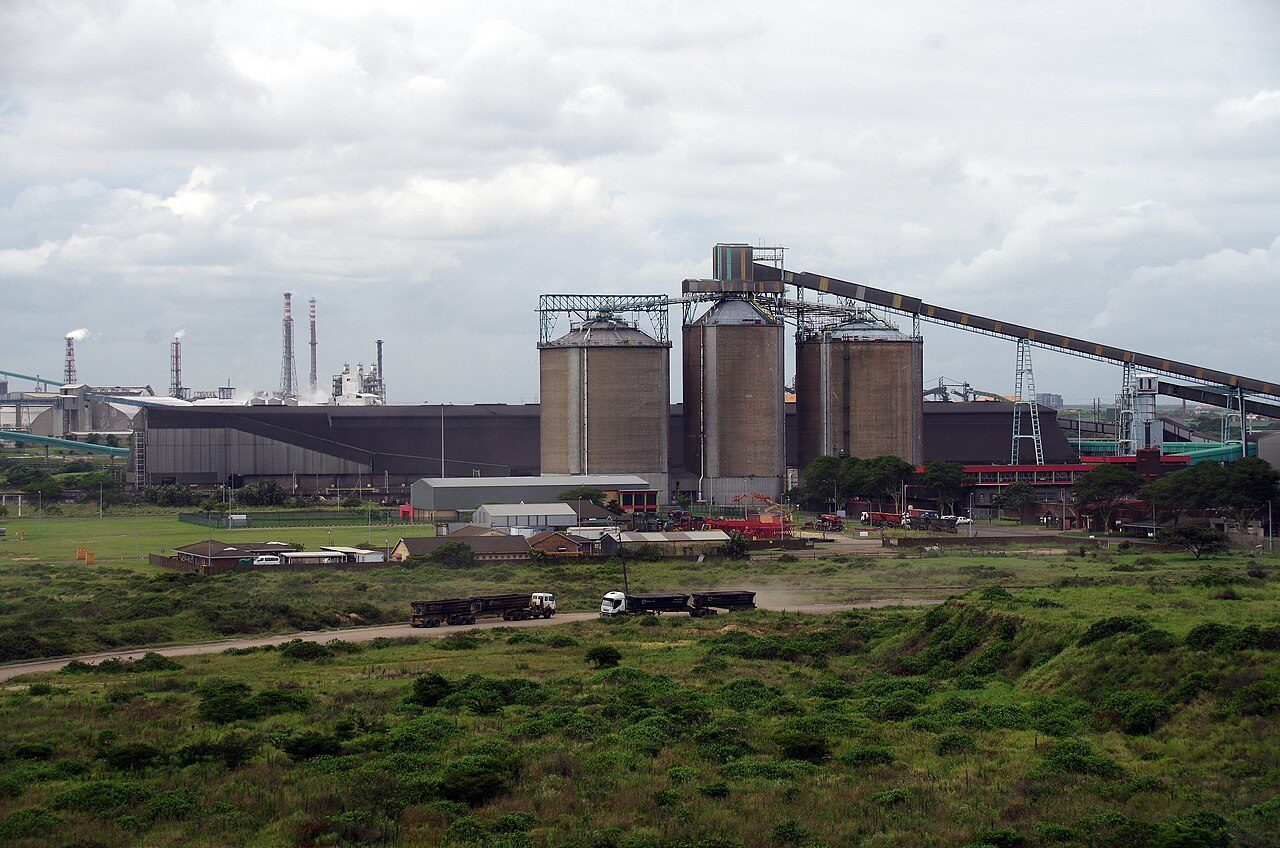
For months, every ton of coal railed into Richards Bay's privately run export terminal carried a hidden risk: a 15% VAT charge on a cargo that is supposed to leave the country tax-free. On 26 August, National Treasury and the South African Revenue Service (SARS) quietly closed that gap — and backdated the fix to 1 April, an unusually candid admission that the country's own tax code had fallen behind the dismantling of Transnet's port monopoly.
The change amends Regulation 8(2)(e)(ii) of the Export Regulations, issued under Section 74(1) of the Value-Added Tax Act, 1991 (Act No. 89 of 1991), read with the definition of "exported" in section 1(1). Until now, a supplier could zero-rate a so-called direct export only if the goods were handed to a short, closed list of recipients at the harbour or airport: the port authority itself, the master of the ship, a container operator, the pilot of an aircraft, or the control area of an airport authority. Deliver the cargo to anyone else, and the supply fell outside the letter of the rule.
That list was written for a Transnet that ran everything. It no longer does. At Richards Bay, the Richards Bay Coal Terminal (RBCT) operates the coal berths under a licence from the Transnet National Ports Authority (TNPA), which owns the wider port. Coal delivered to RBCT was, physically, already at the point from which it would be loaded and shipped — but RBCT is not the port authority the regulation named. As Treasury put it, "since TNPA does not run the terminal, this requirement has become difficult to fulfil." The amendment now recognises "terminal operators operating under a port authority licence issued in terms of sections 57 and 65 of the National Ports Act" as valid delivery recipients, on the same footing as the port authority.
The timing is not incidental. RBCT moved 57.66 million tons of coal in 2025 and is expected to clear more than 60 million tons in 2026 as rail performance recovers — precisely the volumes over which a documentary technicality stops being academic and starts moving real money. Trade lawyer Clive Vinti, writing for XA Global Trade Advisors, framed the amendment as the VAT rules "finally catching up with reality" after years in which the physical export process had outgrown the paperwork describing it.
Zero-rating is not a rounding detail; it is the difference between a clean export and a working-capital hole. When a supply qualifies, the exporter charges 0% and the goods leave with no VAT attached. When it does not, the same supply is standard-rated at 15% — and a foreign buyer will not pay South African VAT on coal it is shipping out of the country. That 15% therefore comes off the exporter's own margin or is fronted as cash and chased back through the return — a timing cost, levied at the standard rate across an export book measured in tens of millions of tons, that ties up working capital the exporter never owed and never recovers from the buyer's landed cost.
Because the fix applies retrospectively from 1 April 2026, the relief is not merely prospective. Exporters who standard-rated a supply this year for no reason other than that the goods went to a licensed terminal operator rather than to TNPA can revisit those returns and correct the value of the supply, recovering VAT that should never have been charged. The logic reaches well beyond a single coal terminal: as dry-bulk and container terminals pass to concessionaires under the same reform that has opened Transnet's rail network to eleven private operators, the delivery-point mismatch would have recurred at every privately run quay. The amendment forecloses that, at least on the narrow question of who may take delivery.
The optimists reading this as a green light should reread Treasury's own qualifier. "The amendment means delivery to a qualifying licensed terminal operator may satisfy the delivery requirement in Regulation 8(2)(e)(ii)," the department wrote. "It does not mean that delivery alone qualifies a supply for zero-rating." That sentence is the whole risk. Delivery point was never the usual reason SARS disallows a zero-rating claim; missing or late export evidence is. The bill of lading, the proof that the goods actually left within the prescribed period, the reconciliation of the declared value of the supply — all of that discipline still stands, and this amendment touches none of it. An exporter who reads "terminal operators now count" as "our zero-rating is safe" has misread the notice.
There is a quieter admission in the backdating, too. A retrospective correction to 1 April is Treasury conceding that the rule was already out of step for the whole of the current tax year, and that compliant exporters were exposed to a 15% charge through no fault of their own for five months before anyone fixed it. It is the right outcome, but it is remedial, not visionary — the tax code reacting to privatisation after the fact rather than anticipating it. The next terminal concession, the next inland dry port, the next licensing structure that does not map cleanly onto sections 57 and 65 of the National Ports Act will raise the same question again, and there is no reason to assume the fix will arrive any faster next time.
This is a genuinely good amendment, overdue and correctly backdated — but it is a documentation prompt, not a windfall, and exporters should treat it as one. First, re-open every VAT return from 1 April onward and identify any export supply that was standard-rated only because the goods were delivered to a licensed terminal operator; those are correctable now, and the recovered VAT is real cash. Second, obtain written confirmation that any terminal you deliver to holds a port-authority licence under sections 57 and 65, and file that confirmation inside the export pack — the burden of proving the delivery point qualified sits with you, not with SARS. Third, do not let the good news erode the evidence discipline that actually protects a zero-rating: Treasury has said in as many words that delivery alone does not zero-rate a supply. Fourth, if you contract with a concessioned terminal, write the licence status and the export-proof obligations into the agreement, so the tax treatment does not hinge on a phone call in a dispute. The rule has caught up with the ports for now. Make sure your paperwork has caught up with the rule.