The Symbiotic Paradox: AI, Supply Chains and South Africa
AI is sold as the fix for broken supply chains — but the buildout strains…
Transnet has invited private capital to fix 9,098km of loss-making branch line — the least glamorous, most consequential step yet in South Africa's rail reform.
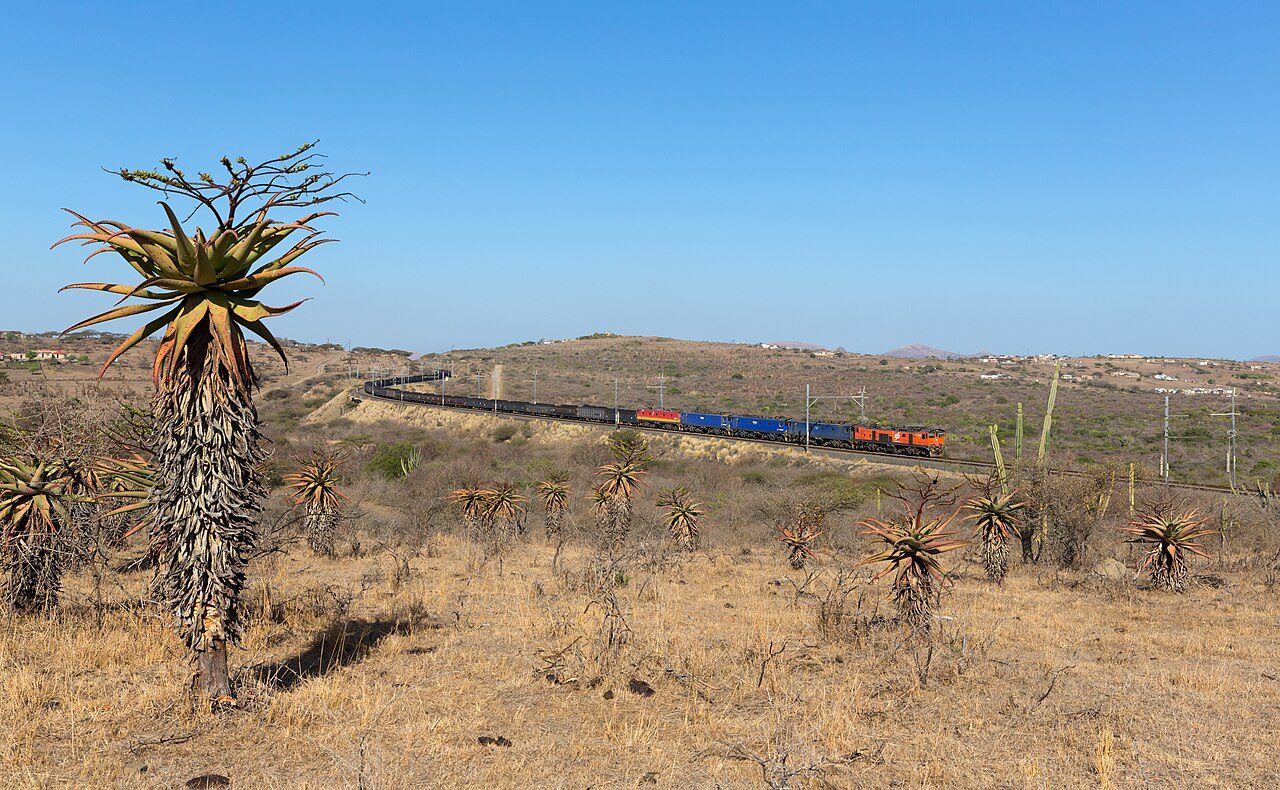
On Wednesday the state entity that now controls South Africa's rail tracks quietly published a document asking the private sector a question the country has dodged for three decades: who will pay to fix the 9,098 kilometres of branch line that mainline reform has so far left rusting? The Transnet Rail Infrastructure Manager (TRIM) issued a Request for Information — submissions due by 10:00 on 30 September — inviting private firms to refurbish, finance, operate and maintain the loss-making "B-Network" that links mines, farms and factories to the corridors where cargo actually moves. It is the least glamorous and most consequential move in the entire rail-reform programme.
The RFI is the sequel to this year's headline event: the Rail Access Agreements concluded with 11 private Train Operating Companies, selected from 25 applicants to run services across 41 routes and six freight corridors. Those deals cracked open South Africa's busy mainlines — coal to Richards Bay, iron ore to Saldanha, manganese from the Northern Cape, containers on the Natal corridor — to private competition for the first time in the network's post-apartheid history. But the mainlines were never the whole problem.
The B-Network is the capillary system beneath those trunk routes: roughly 9,098 kilometres of low-density branch line that carry agricultural produce, chrome, magnetite and light manufacturing to the mainline railheads. Decades of underinvestment, cable theft and locomotive shortages have hollowed them out. TRIM chief executive Moshe Motlohi described private-sector participation on the B-Network as "a critical step" in reforming freight logistics, framed explicitly around the White Paper on National Rail Policy that Cabinet approved back in March 2022. Interested parties are directed to the National Treasury e-Tender portal and Transnet's own tender site.
The context is a decade of retreat. Transnet Freight Rail volumes have slid from a 2017/18 peak of 226 million tonnes to roughly 152 million tonnes in 2023/24, while the group's debt has climbed to around R145 billion. Government's stated ambition is to lift rail freight to 250 million tonnes a year by 2029 — a figure widely dismissed as fantasy eighteen months ago. The 11 mainline operators are expected to add around 20 million tonnes annually from 2026/27. The B-Network is where the rest of that gap either closes or stays a slogan.
Every tonne stranded on a branch line that no longer runs is a tonne loaded onto a truck instead — and that shows up directly in the importer's and exporter's landed cost. Road haulage in South Africa costs materially more per tonne-kilometre than rail for bulk and containerised freight over distance, and it dumps that cargo onto congested arteries like the N3, where queues at the Durban precinct convert into demurrage and detention charges the moment a box overstays the free-time window. A functioning branch-line network is not a rural nicety; it is the difference between a mine or a citrus packhouse railing to port and a fleet of trucks idling on the highway.
For exporters the maths is sharper still. A citrus grower in Limpopo or a chrome producer in the Bushveld who cannot rail to the coast pays the road premium on every consignment, and that premium erodes the same margin already squeezed by port tariffs and a volatile rand. If private operators can restore even a fraction of the derelict branch lines, the effect is felt not as a headline but as a lower quote on a freight invoice and a shorter, more predictable transit time. That is the reform's real prize — and the reason a dry procurement notice deserves more attention than it received.
Here is what the optimists are gliding past. The mainline operators bid for the profitable routes — coal, iron ore, manganese, the container corridors — because those routes generate returns. The B-Network is, almost by definition, the part of the map that does not. Asking private capital to refurbish, finance and maintain 9,098 kilometres of low-density line is asking it to underwrite exactly the assets the state itself let decay because they lost money. An RFI is not a contract; it is Transnet gathering information and testing appetite. The gap between "who might be interested" and "who will sign a binding concession to rebuild and run a chrome branch line in the Bushveld" is the whole ballgame.
Security is the other unquantified variable. Cable theft and vandalism have been a primary driver of the volume collapse, and a private operator's business case on a remote branch line lives or dies on whether the track it refurbishes on Monday is still there on Friday. Until the state can credibly guarantee the corridor it is leasing out, every model built on these lines carries a risk premium that pushes the required return higher than the freight the line can realistically generate. That circularity — no cargo without track, no track without security, no security without cargo revenue — is what killed the branch lines in the first place, and an RFI does not break it.
This is the right question asked at the right time, and it is also the hardest part of the reform Transnet has attempted so far. The mainline access agreements were the easy win — private operators queued up for routes that were already making money. The B-Network is the honest admission that the state cannot fix the capillaries alone, and that admission is worth more than another aspirational tonnage target. But an RFI is a temperature check, not a turnaround, and importers and exporters should plan on that basis. Do not model lower inland freight costs into 2027 contracts on the strength of a September submission deadline; the first refurbished branch line running commercial traffic is realistically years away, not months. Treat the current road-freight premium and N3 congestion as the working assumption for pricing and lead times through at least next year, and lock those into landed-cost calculations rather than betting on relief that has not been signed. Watch two signals above the noise: whether serious operators — the Grindrods and Menars of this market, not consultancies — actually respond by 30 September, and whether government pairs the RFI with a concrete security guarantee for leased corridors. If both land, this becomes the moment ZA rail reform reached the parts that matter. If only the press release lands, it is the third such moment this decade, and nothing on the ground changes.