Durban's 'Most-Improved' Terminal Chokes After Its Software Switch
A mid-August system cutover at Durban Gateway Terminal cut weekly throughput 26% and pushed vessel…
Transnet's R4.6bn profit — its first in four years — rests on the R12.5bn ICTSI terminal sale. Strip it out and the core logistics business still lost money.
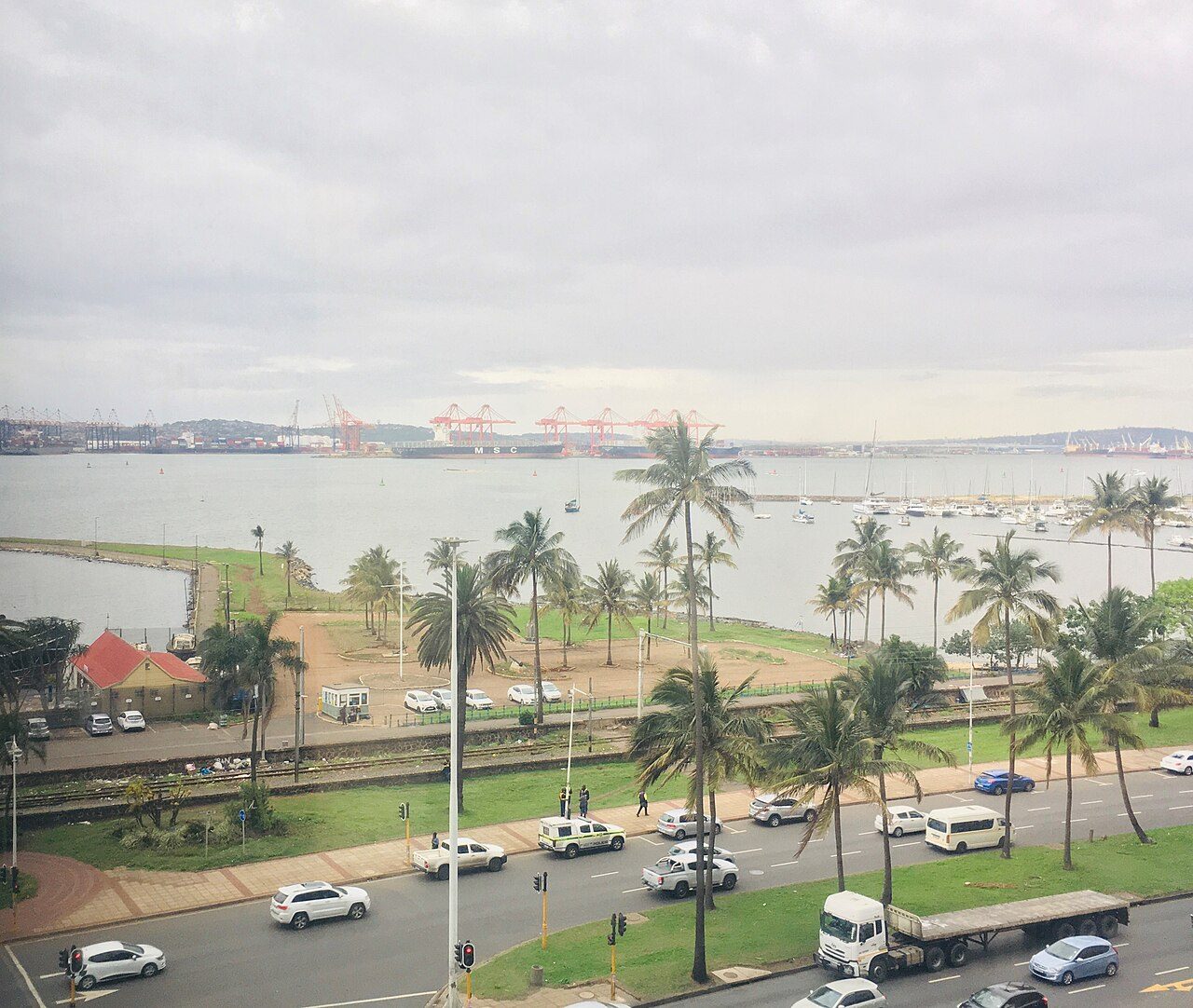
Transnet posted a R4.6-billion profit for the year to 31 March 2026 — its first in four years, and a R6.5-billion swing from the R1.9-billion loss it booked a year earlier. Strip out a single line, though, and the recovery all but vanishes: the number rests on a R12.5-billion gain from handing Durban's largest container terminal to a private operator. On the cargo it actually moved, South Africa's state logistics company still lost money.
Group chief executive Michelle Phillips presented the results in Sandton on 10 September. Revenue rose 7.1% to R88.6-billion, and rail volumes climbed to 167.9-million tonnes from 160.1-million — real operational gains, but still well short of the 180-million-tonne target Transnet has set for itself. Petroleum volumes through the pipeline network rose too, to 14.2-billion litres from 13.37-billion. The detail the headline profit obscures is that container throughput went the wrong way, slipping to 4,048,000 twenty-foot equivalent units from 4,092,000 the year before. Revenue grew; the number of boxes across the quay did not.
The R12.5-billion that made the difference came from the 25-year concession, signed in December 2025, handing Durban Container Terminal Pier 2 to Manila-based International Container Terminal Services Inc (ICTSI). That deal carries an R11-billion investment commitment and is meant to lift the terminal's capacity from 2-million to 2.8-million TEU. Reuters put the arithmetic plainly: without the ICTSI concession, Transnet would have posted another loss. Phillips framed the year as proof the reform was working, telling delegates that the separation of the network into a distinct rail infrastructure manager "has turned structural reform into an operational reality." The reality on the profit line, for now, is a one-off disposal gain.
For an importer clearing a container in Durban this week, nothing in these results changes the two variables that hit the invoice: how long the box sits, and what it costs while it does. Dwell time, the reliability of the landside handover, and the demurrage clock that runs when a terminal cannot release cargo on schedule are all operational conditions a full-year accounting result does not touch. The ICTSI takeover of Pier 2 — which handles roughly 65% of Durban's throughput and around 40% of all South African port traffic — is the one development here with genuine cost consequences for importers, but a terminal ramp from 2-million to 2.8-million TEU is a multi-year build, not relief this quarter.
Exporters read a similar picture. The 7.8-million-tonne rise in rail volumes is welcome for coal, manganese and citrus shippers who have spent two seasons routing around Transnet Freight Rail slippage, but tonnage still sits below target and the container decline suggests the recovery is uneven across commodities. On the cost side, the picture is upward regardless: the Ports Regulator has already trimmed the National Ports Authority's cargo-dues increase to 7.57% for the 2026/27 tariff year — a smaller rise, but a rise. A profitable Transnet is not, by itself, a cheaper or a faster one.
The bull case is that a return to profit proves the turnaround has arrived. The balance sheet argues otherwise. Borrowings rose over the year to R150.7-billion from R144.8-billion, and the group's liquidity has leaned on National Treasury guarantees totalling R98-billion extended between 2023 and 2025. A business whose headline profit depends on selling a stake in its single most valuable asset, while its debt climbs and its container volumes fall, is stabilising — not yet recovering. And the gain cannot be repeated: Pier 2 can be concessioned only once. Unless operations close the underlying shortfall, next year's result reverts to the cargo the network actually moves, with no R12.5-billion disposal to cushion it — which is precisely why the volume lines, not this profit, are the honest measure of whether the reform is landing.
The genuinely encouraging part of the story is the part that has not happened yet. Transnet has outlined a roughly R70-billion capital programme — R68.4-billion of it aimed at the coal, iron-ore, container, manganese and chrome corridors that drive its revenue — and a "transact for value" model for pulling further private operators into the network the way ICTSI was pulled into Pier 2. Those are the deals that would convert a disposal gain into structural capacity. They are commitments, not throughput, and the reader who prices in the reform before the cranes arrive is pricing in a promise.
Treat this result as a floor, not a recovery — and do not let a green profit line loosen the discipline the last four years taught. Three things follow. First, keep your dwell and demurrage buffers exactly where they are through the fourth quarter; the operational conditions that stranded cargo have not changed, and the accounts do not claim they have. Second, watch the metrics that actually move your landed cost — rail tonnage against the 180-million-tonne target, container TEU across Transnet Port Terminals, and Durban dwell — rather than the profit figure, which this year is an artefact of one signature. Third, if you import through Durban, track the ICTSI ramp at Pier 2 as your leading indicator: the day that terminal's realised throughput starts climbing toward 2.8-million TEU is the day the turnaround stops being an accounting event and starts showing up on your clearance times. Until then, plan for the port you have, not the one the profit statement implies.