New SARS Customs Codes for Copper, Abalone, Batteries — Comment by 18 August
SARS's "technical" tariff amendments re-code copper scrap, abalone, lithium cells and steel from 1 January…
Comment on the "Starlink bill" closes on 21 August. The bill never mentions Starlink — and Kenya's subscriber numbers show what the service would actually do here.
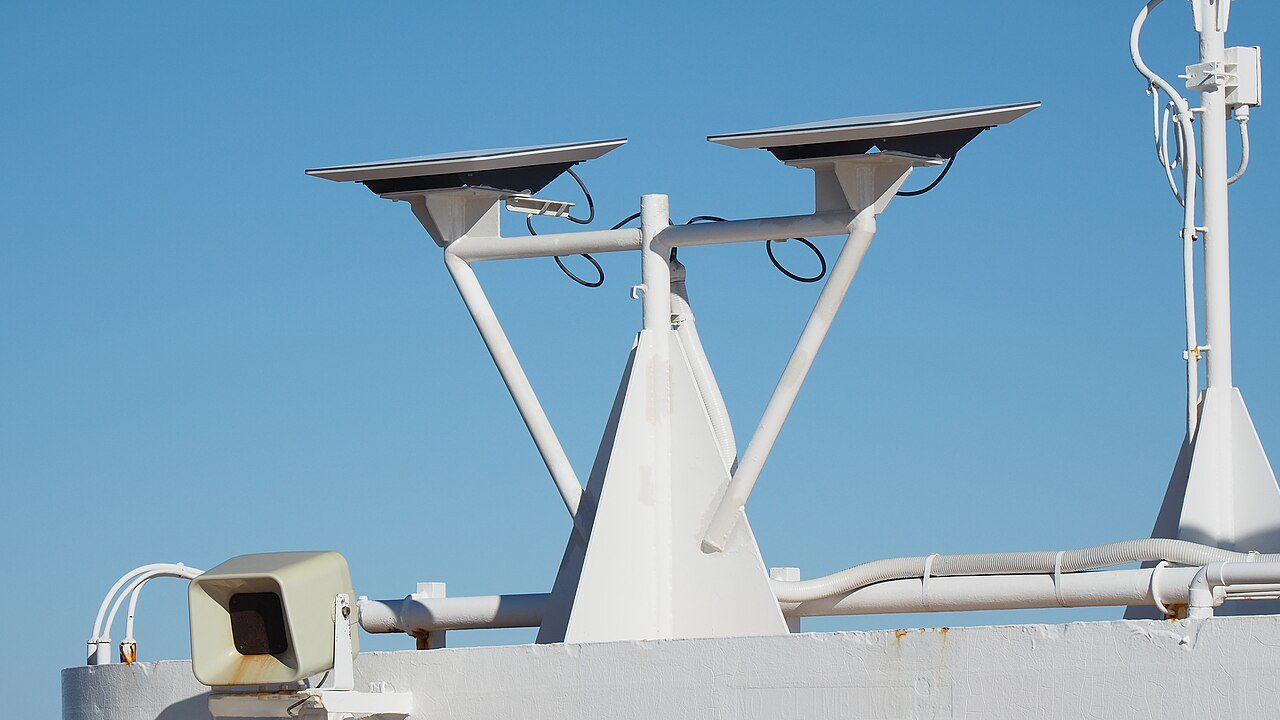
At 16:00 on Friday 21 August, public comment closes on the Electronic Communications Amendment Bill — the law South African commentary has spent four months calling "the Starlink bill". Read B12-2026 from cover to cover and you will not find the word Starlink, the phrase "equity equivalent", or a single clause touching the 30% ownership requirement that has kept Elon Musk's satellite constellation out of the country. Communications Minister Solly Malatsi tabled the bill in the National Assembly on 22 April, and it deals with spectrum, roaming, wholesale pricing and competition enforcement. The argument the country is having is not the argument the bill picks.
B12-2026 is a serious piece of telecoms reform on its own terms. It introduces a "use it or share it" rule for spectrum assigned after 10 December 2021, requiring unused spectrum to be shared after two years of non-use in an area, with secondary licensees — community networks and smaller operators first — paying no fees for twelve months. It creates an "access provider" designation for operators covering 90% or more of the population, which in practice means Vodacom and MTN, and obliges them to offer national roaming and mobile virtual network operator access within 60 days, with the regulator setting terms if commercial talks fail. It converts the Independent Communications Authority of South Africa's discretionary power over wholesale pricing into a duty to make cost-oriented rules within 18 months, and it gives ICASA its own market-inquiry powers alongside the Competition Commission.
What it does not do is touch section 9(2)(b) of the Electronic Communications Act, which requires individual licence-holders to be at least 30% owned by historically disadvantaged groups. That omission is the whole story. In December 2025 Malatsi issued a policy direction asking ICASA to apply the Amended ICT Sector Code, which recognises equity-equivalent investment programmes (EEIPs) — the mechanism that lets a multinational which will not sell local shares invest in qualifying local projects instead. On 13 May 2026 ICASA answered: it would keep engaging, but full alignment with the code, EEIPs included, "would require a legislative amendment". A regulator cannot rewrite a statute by circular. On 24 June a gazette notice signed by ICASA chairperson Mothibi Ramusi confirmed that satellite constellation operators need individual service and network licences plus spectrum rights, and that no invitation to apply for network licences is open while a departmental inquiry runs. SpaceX has still not lodged a formal application.
Strip out the politics and ask the commercial question: what would Starlink actually do to the South African market? Kenya has run that experiment for three years, and the answer is more modest than either camp claims. Communications Authority data put Starlink at 24,999 subscribers at the end of March 2026 — more than triple the 8,063 it had nine months earlier, and still just 0.9% of the country's internet market. Then, in July, the company stopped taking new customers in seven counties, Nairobi, Kiambu, Mombasa, Machakos, Murang'a, Kirinyaga and Kwale among them, because demand had exhausted the capacity overhead.
Nigeria tells the same story with bigger numbers. Starlink reached 66,523 subscribers by the second quarter of 2025, second nationally but still behind Spectranet's 99,520, having raised its residential price from ₦38,000 to ₦57,000 a month in May 2025 — a 50% increase that prompted the Nigerian Communications Commission to bar further rises without approval. In November 2024 it had already halted kit sales over bandwidth shortages. This is the pattern a low-earth-orbit constellation produces wherever it lands: rapid early growth, a hard capacity ceiling in the exact places where population is dense, and pricing power that runs upward, not downward.
For most South African businesses the consumer arithmetic is unflattering to satellite. Fixed broadband subscriptions reached 3.26 million in ICASA's latest count, fibre-to-the-home about 3.01 million, and the cheapest way to get a household online is now prepaid township fibre — Vuma Key at R99 a month, Fibertime at R5 a day — with 5G fixed-wireless routers from roughly R699. No satellite constellation on earth competes with R99. Where 28% of households can already get fibre and 17.4% take it, Starlink is not a price disruptor; it is a premium product for people with no alternative.
But "no alternative" describes a great deal of the map that logistics actually runs on. ICASA's own coverage data shows Limpopo, North West and parts of the Northern Cape materially underserved by fibre, with 5G upgrades following device penetration into cities rather than out of them. That is where the farms, the mines, the border posts, the weighbridges and the long empty stretches of the N1 and N14 are. For an operator trying to hold supply chain visibility across a fleet, keep a reefer's temperature log unbroken between Upington and the coast, or run a remote packhouse's ERP link, satellite is not a luxury tier — it is the only tier. That is the honest case for licensing it, and it has almost nothing to do with home broadband.
There is also a customs point worth getting right, because it is widely misreported. Importing the hardware is not illegal. Three Starlink user terminal antennas and a user terminal router appear on ICASA's published list of type-approved equipment, and a declarant with the type-approval certificate can clear a kit through SARS like any other radio apparatus — with the usual electrical-goods obligations, including an NRCS Letter of Authority where one applies. What is illegal is operating or reselling the service without the licences above, which is why ICASA has confiscated kits from resellers running subscriptions bought in neighbouring countries. Anyone tempted by a grey-market terminal for a remote site should understand the distinction precisely: the box is lawful cargo, the connection is not, and the enforcement risk sits on the service, not the shipment.
Which brings the argument back to where it actually lives. SpaceX has offered roughly $145.6 million in local infrastructure and education spending, including free broadband to 5,000 rural schools valued near R500 million, precisely because it will not sell 30% of itself. A Social Research Foundation poll of 2,214 registered voters, fielded between 8 and 31 July by Victory Research with a 2.1% margin of error, found 58% supportive and 35% opposed when asked whether B-BBEE requirements should be relaxed in exchange for American investment and jobs — though the question posed a trade-off rather than a verdict on the policy itself.
Note what is not in dispute: whatever Parliament decides will apply to every multinational holding or seeking an individual licence, not to one satellite operator. An EEIP door in section 9(2)(b) is a change to the ownership rule for the whole electronic communications sector. That is a far larger question than whether a farm in the Karoo can buy a dish, and it deserves to be argued on those terms rather than as a referendum on Elon Musk.
The truth about Starlink's effect on South Africa is that the effect has already happened, and it was political rather than commercial. A ministerial policy direction, a regulatory refusal, a bill before Parliament and a diplomatic file with Washington have all been spent on a service that, on the Kenyan and Nigerian evidence, would win low single-digit market share and then stop selling in the cities where most South Africans live. Both camps are overstating it: it is neither the connectivity revolution its advocates promise nor the threat to transformation its opponents fear. It is a rural edge product with a capacity ceiling.
Three practical things follow. First, if satellite connectivity matters to your operation — remote depots, mine sites, corridor telematics, cold-chain monitoring — make that case in writing before 16:00 on 21 August, because the hearings will otherwise be dominated by the roaming and spectrum questions the bill actually contains, and the logistics use case is the strongest argument for satellite licensing that nobody is making. Second, do not build a 2027 connectivity plan on Starlink arriving: the bill as tabled does not enable it, an ECA ownership amendment has not been introduced, and no application is pending, which makes 2027 an optimistic floor rather than a forecast. Third, if you are already running a grey-market terminal at a remote site, understand you are exposed on the service and not the hardware, and price the risk of an ICASA confiscation into that decision rather than assuming customs clearance settled the question. Watch one signal above the others: whether a separate ownership amendment is introduced alongside B12-2026 when the portfolio committee begins hearings. If it is, this becomes real in 2027. If it is not, the fight resumes exactly where it started.